
© los ninos films
In 1825, a young Swedish couple arrives in Colombia, chasing the promise of gold, carrying with them the hope that distance might be converted into fortune and exile into a new home. Manuel Ponce de León’s debut feature In All My Journeys I Am Returning takes this real historical migration as its starting point, but quickly loosens the boundaries of the period film to make room for poetic abstraction. The Colombia Karl and Petronella travel through is at once newly independent, politically unsettled and disconnected from chronology, a place where the nineteenth century can brush against the twentieth and where the poetry of a descendant not yet born can echo backward through time. What begins as an expedition into Antioquia gradually becomes a film about inheritance, displacement and the peculiar ways history refuses to remain in the past.
Original Title: Todos mis viajes son viajes de regreso
Director: Manuel Ponce de León
Year: 2026
Country: Colombia, France
Runtime: 89 minutes
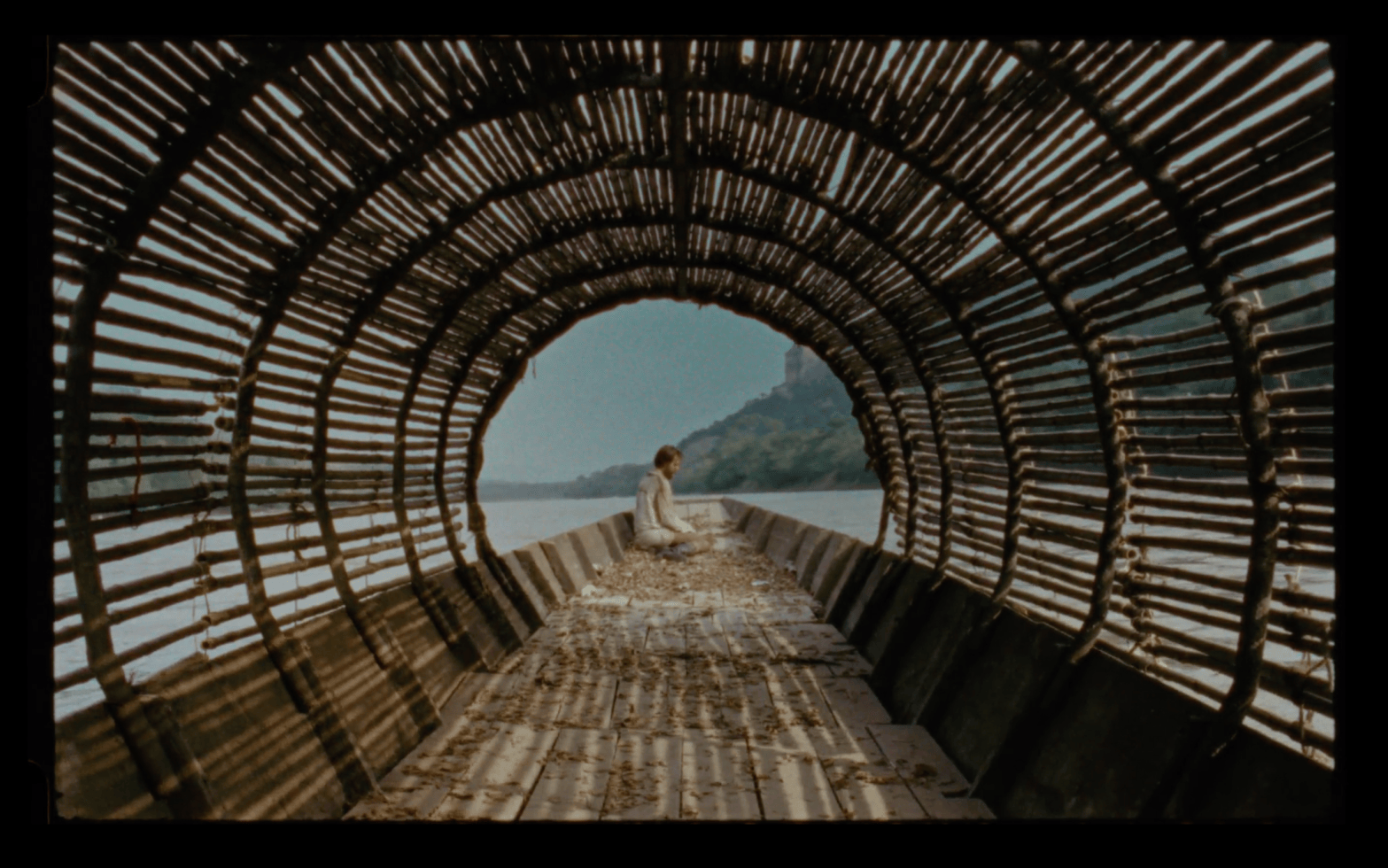
Played with a captivating conviction and incandescence by Fredrik Lundin and Camila Bejarano Wahlgren respectively, Karl and Petronella move through a Colombia that still bearing the wounds of gaining independence. However, Ponce de León is less interested in making a straightforward historical drama than in dismantling the idea of historical time. The film announces this immediately. Instead of providing the audience an image of a nineteenth-century ship or settlement as a first shot, we witness Petronella riding on the back of a motorcycle, her hair loose in the wind as she travels through Colombia. It is a beautiful, liberating image and an impossible one. Past and present occupy the same road. Angello Faccini’s gorgeously lit cinematography reinforces the uncertainty that the landscape is seems to absorb the travelers, making Colombia feel simultaneously material, remembered and dreamed.
That rupture becomes the film’s central method. Historical figures appear where they chronologically should not, including the exiled Mexican general and former president Antonio López de Santa Anna. Rather than mistakes, these collisions make history feel unstable and lasting, as though Karl and Petronella are travelling not only through a physical country but through its accumulated memory, stretching intoo the present.
The key to understanding this unusual – and for some viewers likely to be frustratingly opaque – structure is an awareness of Colombian poet León de Greiff’s work. Karl Sigismund Fromhold von Greiff and Lovisa Petronella Faxe Lindman were his paternal great-grandparents, Swedish emigrants who came to Colombia in 1825. Ponce de León transforms their journey into something like an imagined prehistory of the poet’s work. De Greiff frequently wrote through alter egos and wandering identities, covering themes of displacement, ancestry, longing and belonging. Here, his poetry travels backward in time. Petronella repeatedly reads words that her great-grandson León will not write until generations later, but that increasingly reflect her physical and spiritual journey, with each recurrence taking on new meanings.
The couple’s search for gold gradually becomes a search for a home that may no longer exist, or perhaps never existed at all. Their journey is suspended between Sweden and Colombia, memory and inheritance, the nineteenth century and the twentieth. Even the title, taken from de Greiff, turns movement into paradox, as every departure already contains a return.
Ponce de León therefore treats history less as chronology than as haunting. The past dreams of the future, whereas the future speaks through an accumulation of the past, while ancestry becomes something that can move in both directions. The result is a beautifully poetic film about people travelling toward a destination while already becoming someone else’s memory.
In All My Journeys I Am Returning premiered at the 2025 Locarno Film Festival as part of the festival’s Filmmakers of the Present Competition.

