
IFFR
Sammy Baloji’s The Tree of Authenticity is an experimental and multi-layered essay film that seeks to explore Belgian colonialism in the Congo, connecting historical records to personal memory and environmental discourse.
Original Title: L’arbre de l’authenticité
Directed by: Sammy Baloji
Year: 2025
Country: Democratic Republic of the Congo
Length: 85 minutes
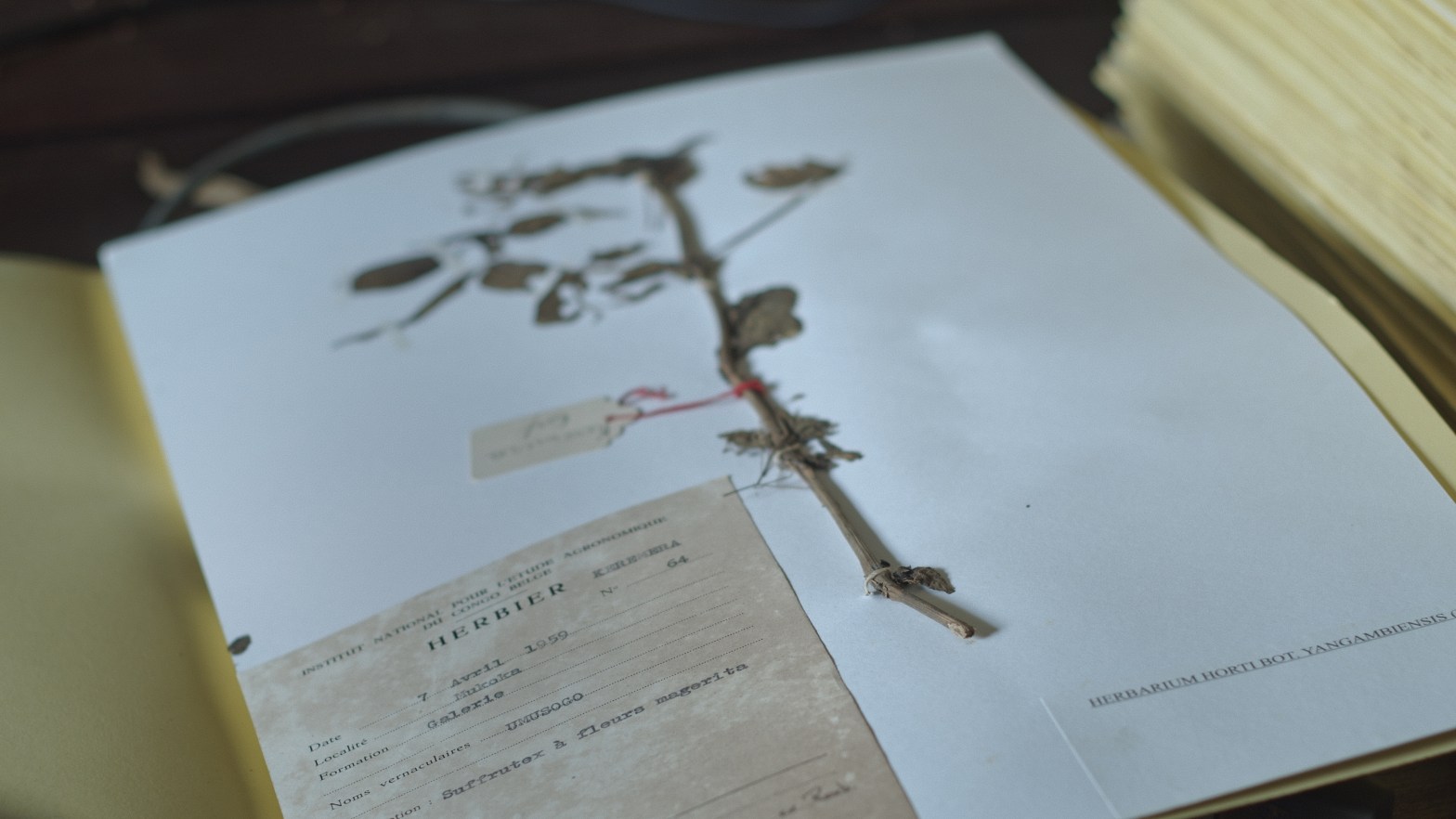
The film opens with archival meteorological observations from 1909 in colonial Congo, detailing rainfall, wind patterns, and temperature fluctuations, seemingly neutral data that reveals the colonial project’s obsession with controlling both people and nature. Static shots and aerial imagery of the Congolese landscape contrast with documents detailing the transformation of places like Coquilhatville (now Mbandaka) and the Eala Botanical Garden. Once described as a “jewel of colonization,” the garden represents both scientific ambition and ecological imperialism, its European-styled rock gardens and vast lawns symbolizing forced environmental assimilation.
At the film’s center are three historical protagonists who narrate their story through voice-over. The first narrator is Paul Panda Farnana, the first Black colonial official, whose life reflects the paradox of colonial mobility. As a cultivation manager and teacher, he is both a beneficiary and a victim of Belgian rule, criticized for not enforcing violent discipline on his students. In 1911, colonial administrators debate whether Congolese Black men are as “civilizable” as African Americans, exposing the racism embedded in so-called progress. Farnana later advocates for Black political rights at the Second Pan-African Congress, yet his legacy remains complex.
The film’s second voice comes from Abiron Beirnaert, a Belgian colonial administrator whose diary entries offer a radically different perspective from Farnana’s. His writings recount his time in the Congo with a mixture of fascination and detachment, his words full of unconscious biases of the colonial mindset. He describes an incident where he struck a baby elephant with his car during a nighttime journey, which subsequently leads to Beirnaert becoming increasingly interested in the Indigenous Congolese way of living. Beirnaert’s writings, told with a sense of adventure, highlight the way colonial narratives exoticized the landscape and its inhabitants. Beirnaert’s account shows the foreigner’s gaze upon the land but also creates a tension between him and Farnana, whose perspective is shaped by displacement rather than dominion. As Beirnaert’s voice unfolds, it becomes clear that his role is one of blindness, gradually coming to recognize his own position in a system of oppression.
The third narrator is the film’s namesake: the Tree of Authenticity itself. Here, nature assumes a voice of its own, emerging as a previously mute witness to the struggles over land, identity, and colonial legacy. The presence of the tree introduces an ecocritical layer to the film, reminding the audience that beyond human conflict, the land itself bears the scars of colonialism. By providing agency to nature, Baloji shifts the perspective from human history to a broader reckoning with environmental exploitation.
By tying colonial agricultural policies to contemporary capitalism, The Tree of Authenticity highlights the endurance of Belgian rule. Baloji’s contemplative style, blednding shots of contemporary Congo and layered archival narration, forces the viewer to absorb history’s weight. The film doesn’t provide easy answers, but rather adds to the postcolonial discussion on the past’s grip on the present.
“The Tree of Authenticity” premiered at the 2025 International Film Festival Rotterdam as part of the festival’s Tiger Competition.

