

“Toxic,” the directorial feature debut by Saulė Bliuvaite and winner of the Golden Leopard at this year’s Locarno Film Festival, is a holistic look into the realities of a community in a Lithuanian industrial town. The film centers on 13-year-old Maria (Vesta Matulyte), who, after being abandoned by her mother, is left to survive a harsh world with only her grandmother as a guardian. This isn’t a story about easy resolutions or hopeful escapes; it’s about survival and the fleeting connections that offer some semblance of comfort amidst the turmoil of life in a bleak lower-class industrial village. The film’s portrayal of a community trapped in cycles of poverty and exploitation feels authentic, particularly through its focus on Maria’s evolving relationship with Kristina (Ieva Rupeikaite), another girl her age with dreams of becoming a fashion model.
Author Archives: Julian Janssen
Locarno 2024 Review: “By the Stream”
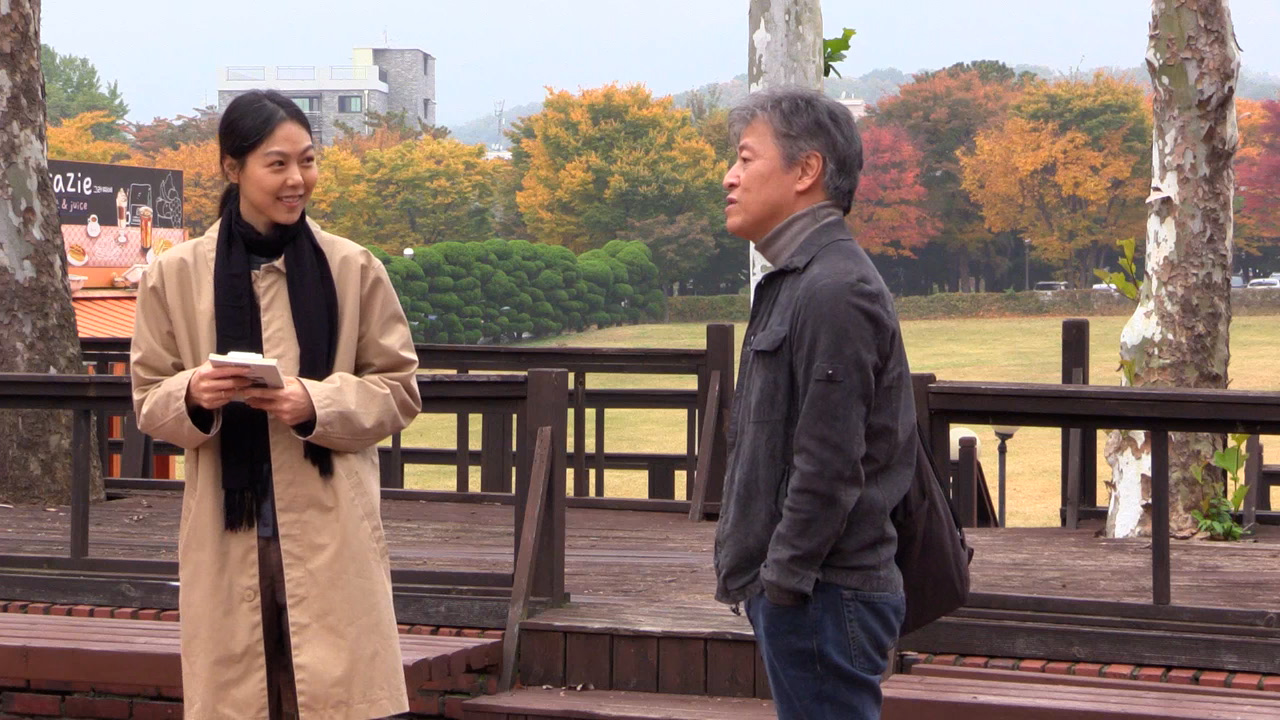
Hong Sang-soo’s “By the Stream” marks his 32nd feature film and impressively, once again his second release of the year. With an ever-steady pace that only few filmmakers can match, Hong’s output is impressive not just for its quantity, but for the depth and originality each film consistently brings. In his previous film, “A Traveler’s Needs” Hong turned his attention to the acquisition of language, exploring the way foreign languages can bring new dimensions to one’s understanding of life. Now, with “By the Stream” he shifts his focus to the realm of art—examining the process of creation, the authenticity it holds within the context of reality, and the impact that making art can have. Perhaps even more than his previous works, By the Stream is also a meditation on the blurred lines between truth and fiction, the fiction we can find in truth and the truth that is hidden within fiction.
Cannes 2024 Review: “When the Light Breaks”

In Rúnar Rúnarsson’s latest film, “When the Light Breaks,” Una and Diddi, two young Icelandic art students and band members, are deeply in love. They find themselves lost in the mesmerizing dusk, their thoughts drifting away as they smoke joints together. They dream of traveling, ultimately choosing Japan as their destination. When the sun rises, Diddi will break up with his girlfriend, Klara, allowing him and Una to openly embrace their relationship. The future seems bright for the couple, but their hopes are shattered dashed by a tragic event.
Cannes 2024 Review: “The Other Way Around”

Jonás Trueba’s “The Other Way Around” is a sensitive, cerebral rom-com that balances humor, philosophy, and meta-cinematic elements and uses the latter two elements to distinguish itself from the genre. The film follows Ale (Itsaso Arana) and Alex (Vito Sanz), a couple on the brink of separation after 15 years together. Trueba’s approach to the narrative is unconventional and refreshing, turning the typical breakup story on its head by having Ale and Alex throw a party to celebrate their separation and repeatedly finding themselves in the same situation.
Berlin 2024 Review: “Who by Fire”
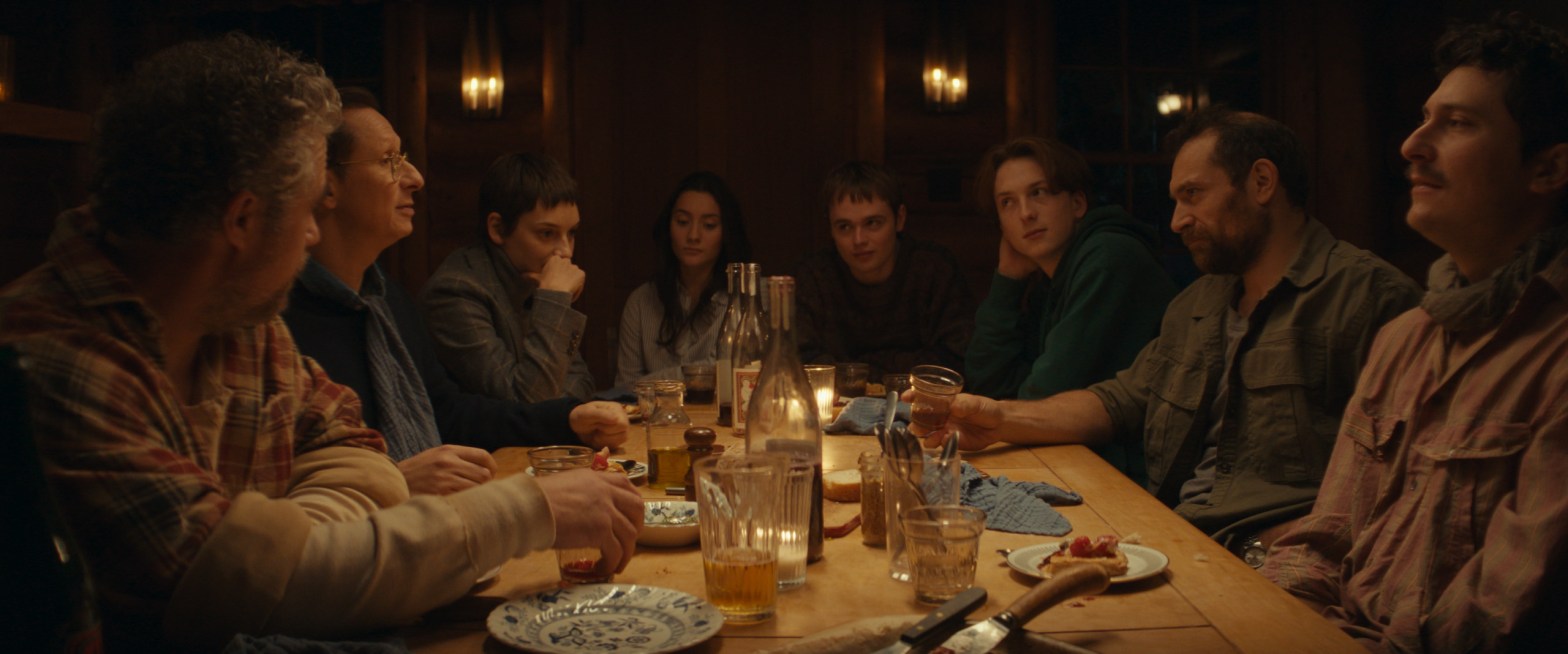
“Who By Fire,” the third feature film by Canadian director Philippe Lesage, delves into the various dynamics of relationships against the isolated backdrop of a Canadian wilderness lodge, with seventeen-year-old Jeff at the narrative’s core. Invited for a holiday by his friend Max to director and family friend Blake Cadieux’ home, Jeff is introduced to a set of complex relationships, leading to life-altering revelations and events.
Berlinale 2024 Review: “Who Do I Belong To”

Following her 2018 Oscar-nominated short “Brotherhood,” Meryam Joobeur’s debut narrative feature, ‘Who Do I Belong To,’ is a sensitive and emotionally charged examination of a Tunisian family torn apart by radicalization. Through a lens that is both intimate and deeply affecting, Joobeur explores the limits of a mother’s love, faced with the harrowing realities of her son’s actions. Amplified by Joobeur’s strong directorial decisions the film delivers a narrative that’s deeply embedded in the complexities of familial bonds and the pain of disillusionment.
Berlinale 2024 Review: “A Traveler’s Needs”

“A Traveler’s Needs,” directed by celebrated auteur Hong Sangsoo, is a thought-provoking exploration of how engaging with foreign concepts—be it culture, language, or individuals—can profoundly shift our perspectives and challenge deeply held beliefs and culturally ingrained structures. This film navigates the philosophical and existential terrains of identity, expression and interpretation by focussing on language acquisition and reflections on art. Through a series of conversations, it presents a case for the enriching influence of embracing the unfamiliar, suggesting that our encounters with the unknown can lead to profound self-reflection and a broader understanding of life’s possibilities.
Berlinale 2024 Review: “Rising Up at Night”

This work by Nelson Makengo, is an overwhelmingly evocative documentary that delves into the stark realities of life in the Democratic Republic of the Congo, particularly focusing on the struggles faced by residents in Kinshasa amid frequent power outages and devastating floods. Makengo depicts the struggle of his subjects that is as much about the physical darkness brought on by the lack of electricity as it is about the metaphorical darkness of living in a disaster-stricken area.
Berlinale 2024 Review: “Cu Li Never Cries”
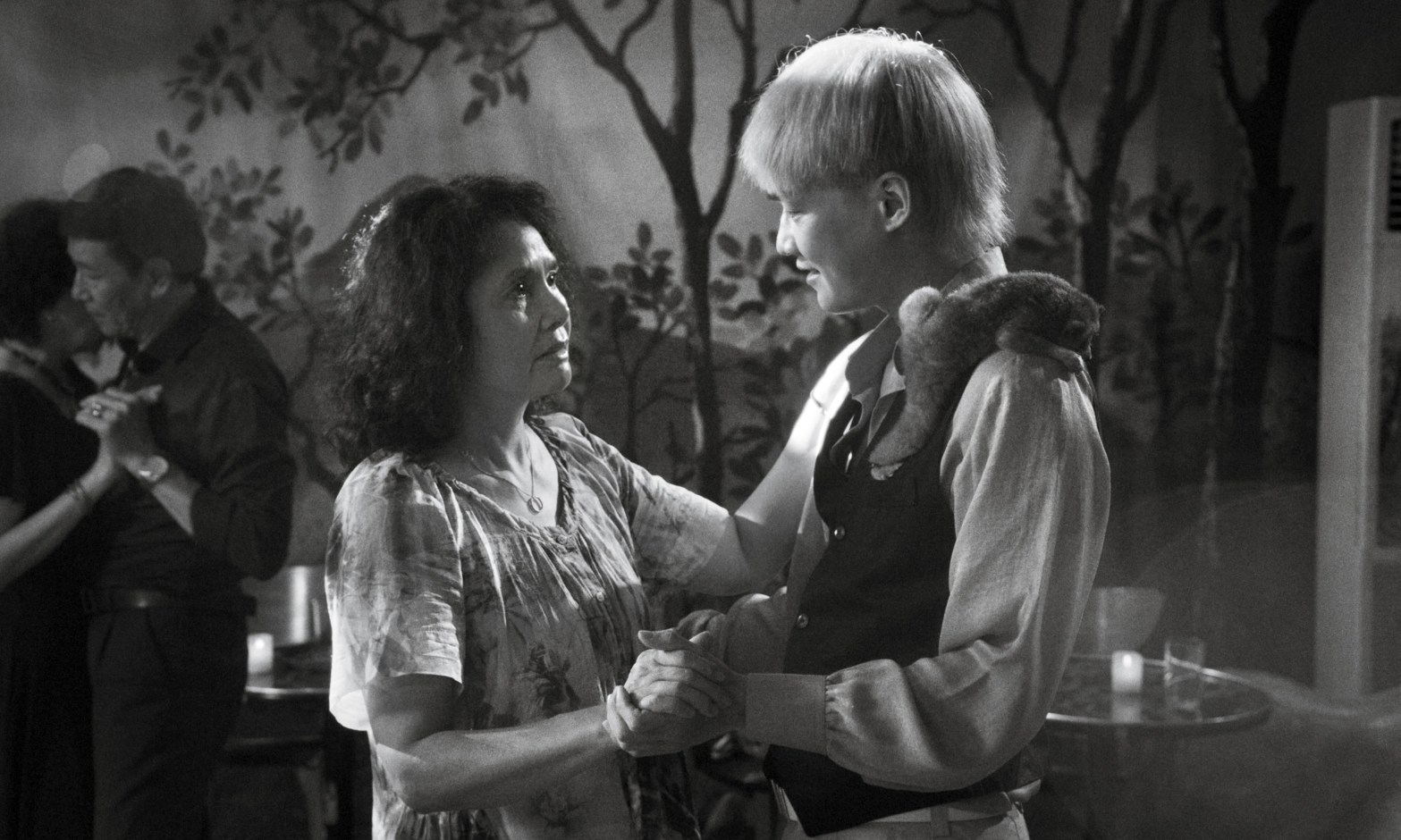
After presenting a series of compelling short films at prestigious festivals such as Locarno, Sundance, and Berlinale, Vietnamese filmmaker Phạm Ngọc Lân has finally premiered his eagerly awaited debut feature, Cu Li Never Cries, at the Berlin Film Festival. The film offers a poetic exploration of how the past continues to influence us and the journey of adapting to the inevitable changes of the present and future. It follows an elderly woman, Mrs. Nguyện, as she navigates a world that has dramatically transformed around her.
Berlinale 2024 Review: “Pepe”

¨Pepe¨, the sophomore feature from Dominican director Nelson Carlo de Los Santos Arias is a bold outing that recounts the life and death of real-life hippopotamus Pepe in a wildly imaginative and stylistically exciting manner, covering a wide range of topics and concepts to explore themes surrounding colonialism, racism, exploitation and the feeling of being ¨othered.¨
 obviouslyreviews.com