
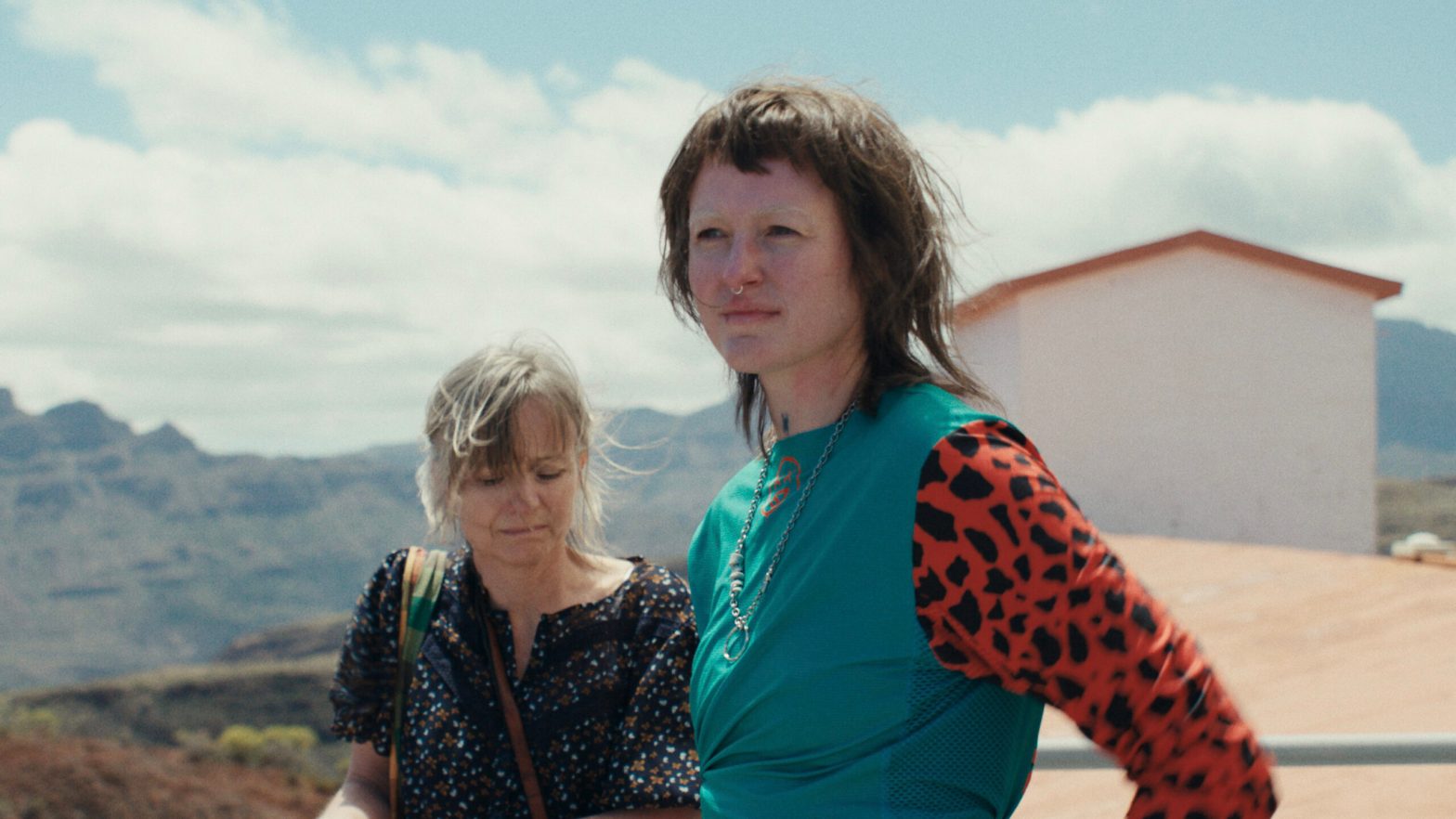
© Mer Film
With Butterfly. her sophomore feature film, Itonje Søimer Guttormsen returns to the International FIlm Festival Rotterdam with something that initially feels like a radical departure from her debut, Gritt. The film opens with flashy camerawork and a hazy, nearly spiritual atmosphere, suggesting that Guttormsen is treading new waters through visual experimentation. Yet, as the story unfilds, the aesthetic wildness gradually gives way to a continuation of Guttormsen’s more recognizable style, albeit slightly less cohesive, as emotionally raw characters find themselves challenged by questions of identity and art.
Directed by: Itonje Søimer Guttormsen
Year: 2026
Country: Norway, Sweden, UK, Germany
Length: 120 minutes
After their mother’s death, estranged sisters Diana and Lily travel to Gran Canaria to piece together the mystery of her final decades leading to her untimely death. They hadn’t spoken to her in 27 years. What happened? How did she die? What kind of life did she lead within a cult-like group devoted to spiriutal ascension, and what to do with the material and spiritual property she left behind? As Lily begins shaping this material into an art project, the viewer is made to wonder where the line is between documentation and exploitation. Following this, both sisters set out on their own journey to reconcile with their late mother and her beliefs.
The film stars Renate Reinsve as Lily, alongside Helene Bjørneby as her sister Diana. Reinsve, beloved for her performances in acclaimed Norwegian films, such as Joachim Trier’s The Worst Person in the World and last year’s Sentimental Value, which resulted in an Oscar nomination for Reinsve, has become one of Norway’s most recognizable performers. Here, however,, she is almost unrecognizable, With bleached brows, blunt bangs, a septum piercing, and a confrontational artsy stage persona, Lily is a far cry from Reinsve’s previous roles. She snorts cocaine, scream-sings as a performance artists, and wears a phallic tail prosthetic in one of her more provocative acts. It’s a transformative performance, depicting a woman unraveling and (de-)constucting herself in public, ultimately finding a place for herself.
Formally, GUttormsen mirrors a sense of instability. THe camera constantly shifts from handheld immediacy to more polished and composed frames, while aspect ratios change just as often. Guttormsen’s intention seems to immerse the viewer into the fractured perspective of the sisters and to blur the boundaries between lived experience and mediated image. At times, primarily at the start of the film, this heightens the sense of emotional and artistic vertigo. However, the relentless switching feels increasingly messy as the film progresses, as if the film’s visual language is fighting itself rather than deepening its narrative.
One of the film’s greatest moments comes with the return of a performer from several of Guttormsen’s earlier works, now inhabiting a role that feels almost lived in. Despite mainly functioning as a cameo, the actress’ naturlistic and charasmatic presence captivates in a way that transcends the performances of the more established actors in this film.
Although Butterrfly’s aesthetic ambition may come at the expense of a thorough exploration of the narrative’s emotional core, viewers may find themselves intrigued by Renate Reinsve’s transformative work and her character’s arc, while fans of Guttormsen are met with a reward that links the film back to the director’s earlier, more successful works.
Butterfly premiered at the 2026 International Film Festival Rotterdam (IFFR) as part of the festival’s Big Screen Competition.
 obviouslyreviews.com