
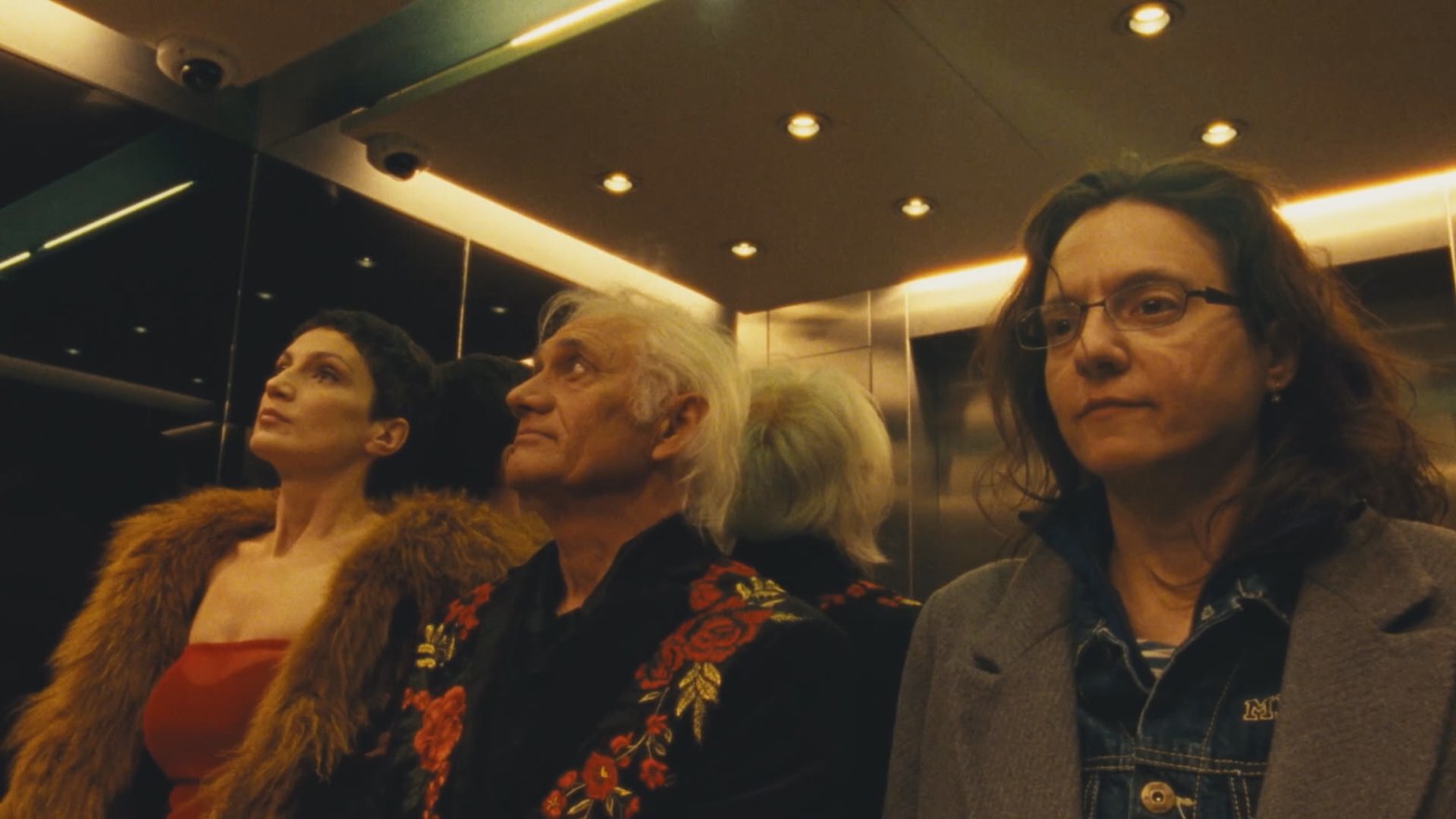
© microFILM, Dunav 84
Ivana Mladenović’s Sorella di Clausura is a darkly comic portrait of obsession, delusion, and the strange collisions between celebrity culture and everyday survival. Featuring a fearless performance from Katia Pascariu as the unforgettable Stela. Around her orbit Boban, a former Yugoslav idol, long past his glory days, and Vera Pop, a hypersexual pop star who turns sex into commerce., the film builds its own mad energy from the very first moments. A bright red title card declares, “If you thought you were going to watch a film based on true events, you are wrong and possibly paranoid,” setting the tone for a story that oscillates between satire, melodrama, and tragic comedy. Adapted from Liliana Pelici’s autobiographical manuscript, the film reshapes her personal testimony into a wild narrative that keeps viewers laughing, cringing, and thinking in equal measure.
Directed by: Ivana Mladenović
Year: 2025
Country: Romania, Serbia, Italy, Spain
Length: 107 minutes
The story takes place in Romania in 2008, a time when post-EU optimism coexisted with rising inequality and economic fragility. The socio-political context is woven directly into the texture of the film, from news broadcasts lamenting “gypsies richer than decent Romanians” to references to the ticket prices of concerts and the boom-and-bust climate of Bucharest. These details provide a backdrop to Stela’s personal breakdown in a society struggling to define itself. Her obsession with Boban, a Yugoslav pop idol who has long since lost his shine, becomes a distorted reflection of a country caught between dreams of progress and the weight of decline.
Stela herself is full of contradiction: highly educated yet unemployed, surrounded by family yet constantly stealing from them, desperate for love yet scornful of others. She takes her uncle’s pension, the only money her family has, to attend Boban’s concert. She meets him briefly outside his hotel, flashes him for attention, and convinces herself that the encounter was fate. When Boban later suffers an accident, she declares her own prayers caused it, claiming divine power over his body. Her monologues to a computer screen, where she pleads, curses, and demands affection, reach an absurd crescendo when she declares, “If you won’t share a little pleasure with me, may you fall and break your back. Feel my pain.”
The performance from Pascariu is astonishing in its range, presenting Stela as both hilarious and horrifying. She works briefly ironing clothes, then behind a market stand, only to fail at both. She cuts herself to prove devotion. She attempts suicide for the fourth time since 1986. In one of the most outrageous sequences, she steals a poster of Boban from a bus stop and has sex with it.
The introduction of Vera Pop, played with sharp energy by Cendana Trifan, shifts the narrative into a new register. Vera, a glamorous singer rumored to be Boban’s mistress, takes Stela under her wing in Bucharest. She sets up a business selling erotic products, a symbol of the EU-era hustle, only for the enterprise to collapse when the economy falters. From there, Stela becomes a servant, and later an aspiring writer encouraged by Vera to turn her obsessive letters to Boban into a book.
Mladenović directs with a keen eye for setting. The cramped apartments, interiors, and era-accurate props feel entirely authentic to 2008 Romania.
Sorella di Clausura thrives on its contradictions. It is a film about obsession, poverty, and power, contrasting a hypersexual character with a nearly sexless woman. It is funny, even when painful. It is grounded in Romania’s recent history, while also feeling universal in its portrait of longing. Mladenović’s film provokes laughter and disbelief while reminding us of how closely personal “madness” and political upheaval can be intertwined.
Sorella di Clausura premiered at the 2025 Locarno Film Festival as part of the festival’s International Competition.
 obviouslyreviews.com