
© Kinorama
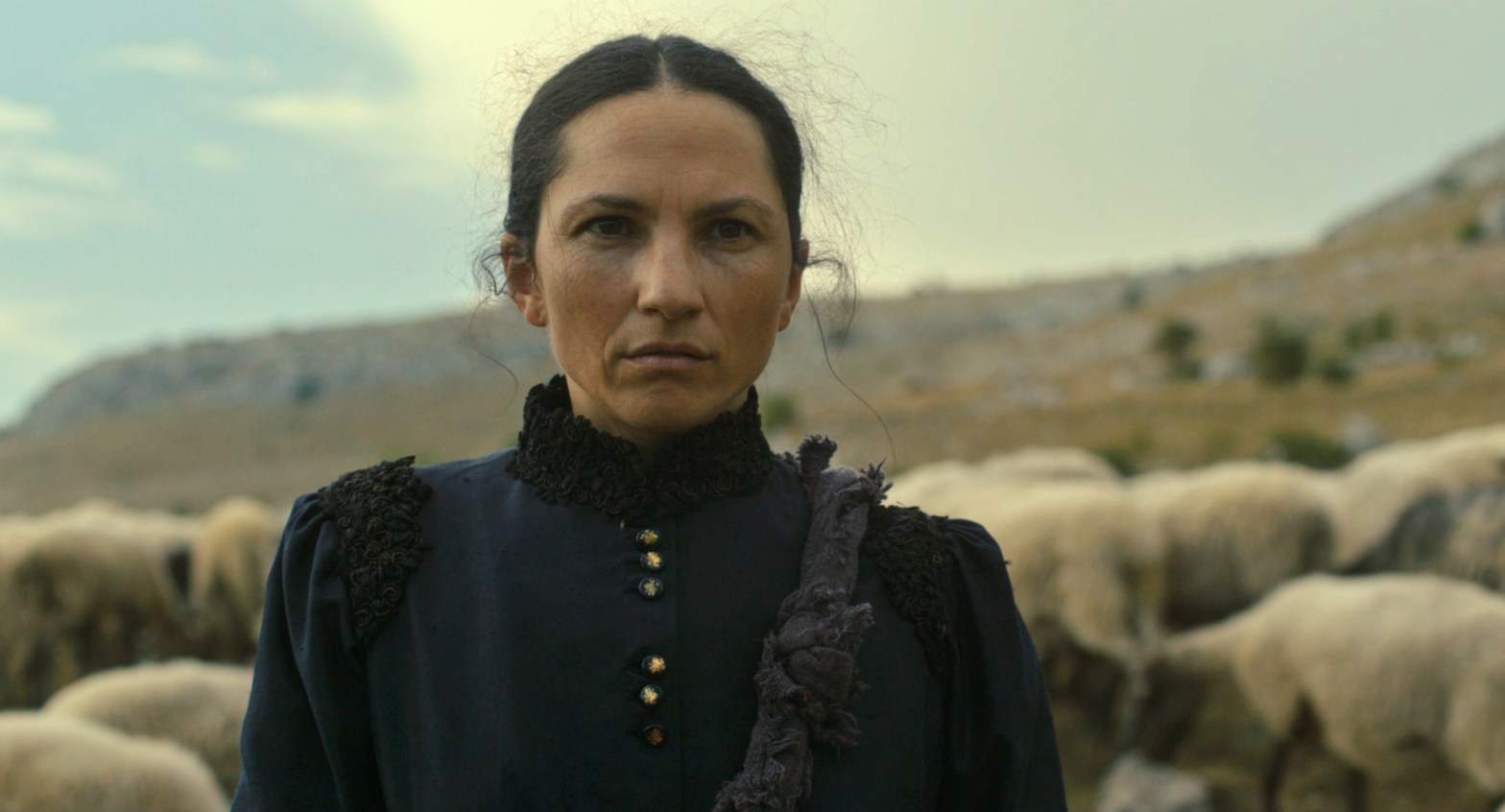
God Will Not Help, the sophomore feature from Croatian director Hana Jušić, is a poetic work on grief, faith, and the universal experiences of women within a patriarchal society. Led by powerful performances from its two stars Manuela Martelli as Teresa and Ana Marija Veselčić as Milena, the film explores how solidarity between the oppressed is able to form even in silence and cultural differences, and how it becomes their only shield against subjugation.
Original Title: Bog neće pomoći
Directed by: Hana Jušić
Year: 2025
Country: Croatia, Italy, Romania, Greece, France, Slovenia
Length: 137 minutes
The film opens with an extended prayerlike sequence: “The roosters are crowing. The hour is here. Holy virgin embraces it and the saints rever.” This lyrical invocation establishes Teresa’s inner world and journey journey, guided by religious imagery and prayer, with an almost desperate reliance on divine aid. A Chilean woman, Teresa travels across oceans, mountains, and villages by boat, by donkey, and finally on foot, carrying the burden of her husband Marko’s death. She seeks to return his body to his homeland, bringing with her the secrets and unspoken truths left behind by his absence.
In the Croatian highlands, Teresa meets Milena, Marko’s sister, a young Croatian woman left alone to guard her family’s home through the summer. Their first meeting is uncertain, marked by distance and incomprehension, as neither can speak the other’s language. Yet slowly, through shared gestures, objects, and their shared experiences as women, they create a space of recognition. The film excels in depicting this bond, constantly building chemistry, made possible by the performances of the two actresses. Their companionship becomes a key to survival and sanctuary. Jušić portrays their connection with a subtle touch of magic, as though each moment of mutual understanding is divinely blessed.
When Nikola, the youngest brother, returns, the story quickly shifts from a private space of safety for women to the broader weight of custom and male entitlement. Nikola’s arrival clarifies Milena’s situation, as she is mocked, ignored and kept mute by expectation. Teresa, the foreign widow, quickly becomes subject to suffocating laws herself. If Marko is dead, another brother must claim her according to this society. As more community members are introduced to the story, it is revealed that the cruelty Nikola, and with him other men, subjects women to is an extension of a system in which men, pressured by societal norms, consistently reveal themselves as complicit in violence. Even when a male character proves to be capable of solidarity with Teresa through his own oppression, he ends up being part of a larger oppressive whole. Within this context, women have no allies but each other.
Much of this tension is embedded in the film’s visual style. Jušić and cinematographer Jana Plećaš utilize long deliberate pans throughout the film. The movements serve beyond aesthetic purposes, and are used to withold information, suggesting that there is always more beyond the frame’they gradually expand to reveal the wider picture of a community governed by tradition; and they mimic the women’s constant search, their gaze stretching upward and outward for answers. Each pan reminds the viewer that the story extends beyond what is shown, or known to both character and audience.
God Will Not Help builds up tension towards a release that feels hard-won. In this film, women refuse to be contained, finding ways to claim their own space outside of the system that seeks to silence them. Although oppression is constant, so is reillience. In silence, allyship, and revolt, the women carve out their own story to gain a life beyond submission.
God Will Not Help premiered at the 2025 Locarno Film Festival as part of the festival’s International Competition, where Martelli and Veselčić both won the award for Best Performance.
 obviouslyreviews.com