
© Casa Azul Films
Frequent Godard-collaborater Fabrice Aragno’s debut feature Le Lac is a film to feel, rather than to follow like a conventional movie. Renouncing traditional dialogue and narrative progression, Aragno’s film is a sensorial experience that prioritizes touch, sound, and image over words. Over the course of five days, we accompany a couple, Anna (Clotilde Courau) and Vincent (Bernard Stamm), as they join a sailing race across a vast lake. What unfolds is an exploration of intimacy, nature, and the moments in which life itself feels most alive.
Directed by: Fabrice Aragno
Year: 2025
Country: Switzerland
Length: 75 minutes
Words in Le Lac are rare. Instead, the chemistry between Courau and Stamm reveals itself through glances, gestures, and shared rhythms. Their relationship is communicated through proximity, patience, and participation in the world around them. A hand resting on a shoulder, the sound of water breaking against the hull, the long silence of night all carry more emotional weight than words. Aragno positions us to see and hear what binds them, the act of being immersed together in nature, dependent on the wind, the waves, and each other.
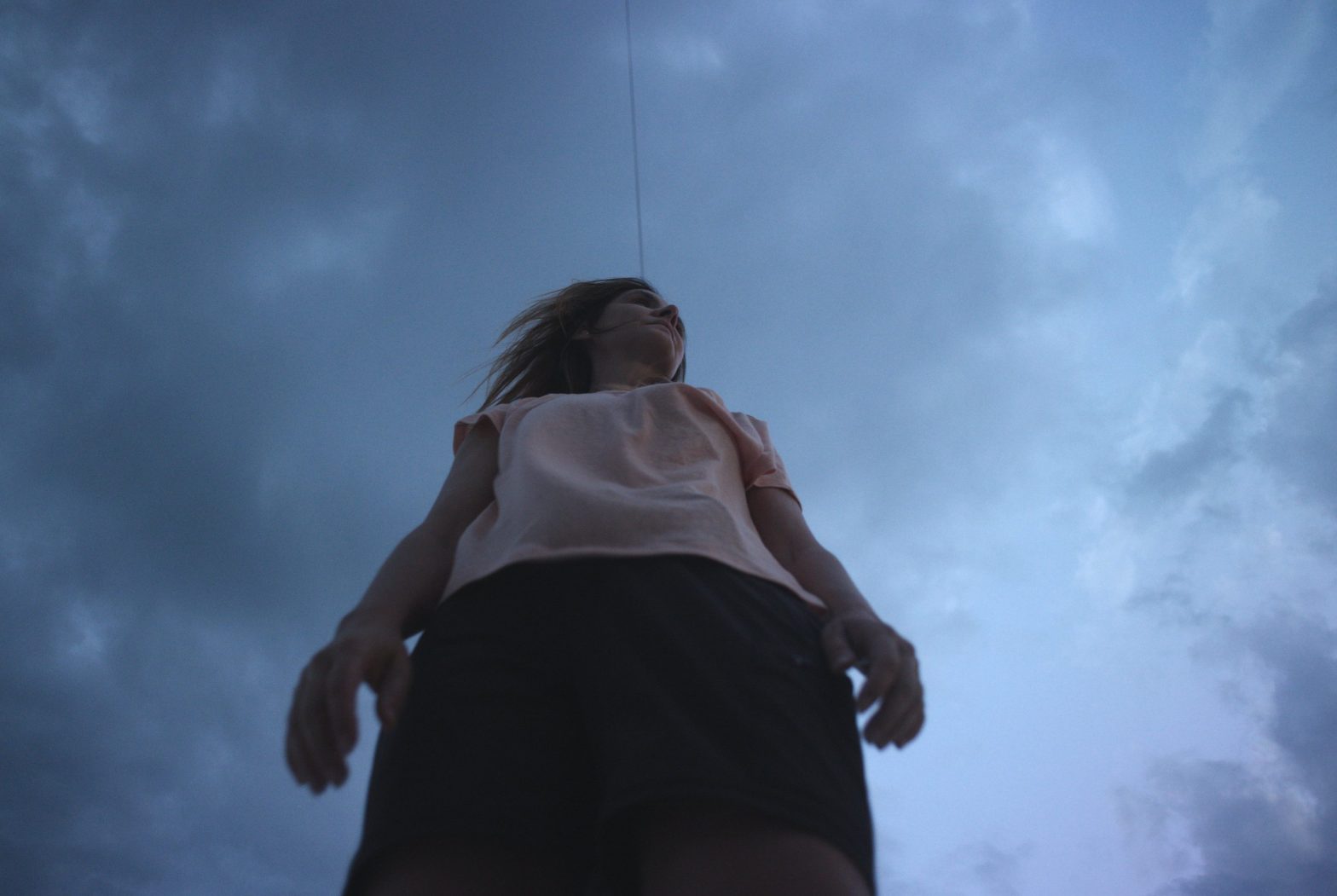
Visually and sonically, Le Lac is an astonishing achievement. The soundscape is a constant presence in the couple’s journey, with every creak, splash, and shift in the wind forming part of a living, breathing world. Aragno’s camerawork is equally immersive, moving fluidly between intimate close-ups and expansive studies of the sailboat and its environment. One of the most remarkable sequences shows Courau climbing the mast. Here, we suddenly see her impossibly high in the sky, suspended in a way that feels almost otherworldly. The image is less about physical effort than about transcendence, a fleeting vision that lifts the film into a reality beyond the everyday, transforming a simple action into something cosmic.
The film also plays with contrasts. After long passages on the water interspersed with images of the couple surrounded by green in nature that may or may not be part of a memory, we cut once to a domestic scene. Here, Anna and Vincent are enclosed, separated by walls, the palette drained of vitality compared to the fullness of life on the lake. The shift is jarring, as though all the energy and intimacy we felt in nature has evaporated. This single interruption sharpens our sense of the freedom and immersion in the natural world that Le Lac is really about, and how quickly it vanishes when the characters are confined, be it by enclosed space or grief.
One of the most magical sequences comes when the couple passes another boat. The frame rate suddenly drops, altering the perception of movement. Water and light scatter into sparks, and the screen becomes awash in blue. The couple embraces, and the effect is nothing short of transcendent. Time seems suspended, as if Aragno has momentarily broken the image open to reveal pure sensation, an impression of love and presence beyond conventional storytelling techniques.
The experience of Le Lac recalls the sensorial cinema of Franco Piavoli, in which nature and sound envelop the audience more than story does. It is not a film to primarily be analyzed in terms of plot, but one to immerse oneself in, guided by Aragno’s tangible description of feeling. By the end, the viewer feels they have lived something with Anna and Vincent, rather than simply watched them.
Le Lac premiered at the 2025 Locarno Film Festival as part of the festival’s International Competition.
 obviouslyreviews.com