
IFFR
Pirjo Honkasalo’s Orenda, which premiered at the 2025 International Rotterdam Film Festival, invites viewers into a world both intimate and wide in thematical scope. It’s a meditation on grief, guilt, faith, and identity, wrapped in a narrative that unfolds with deliberate pacing and quiet intensity. While it may not appeal to those seeking immediate clarity or conventional storytelling, Orenda offers a rewarding experience for those willing to engage with its complexities.
Directed by: Pirjo Honkasalo
Year: 2025
Country: Finland, Estonia, Sweden
Length: 117 minutes
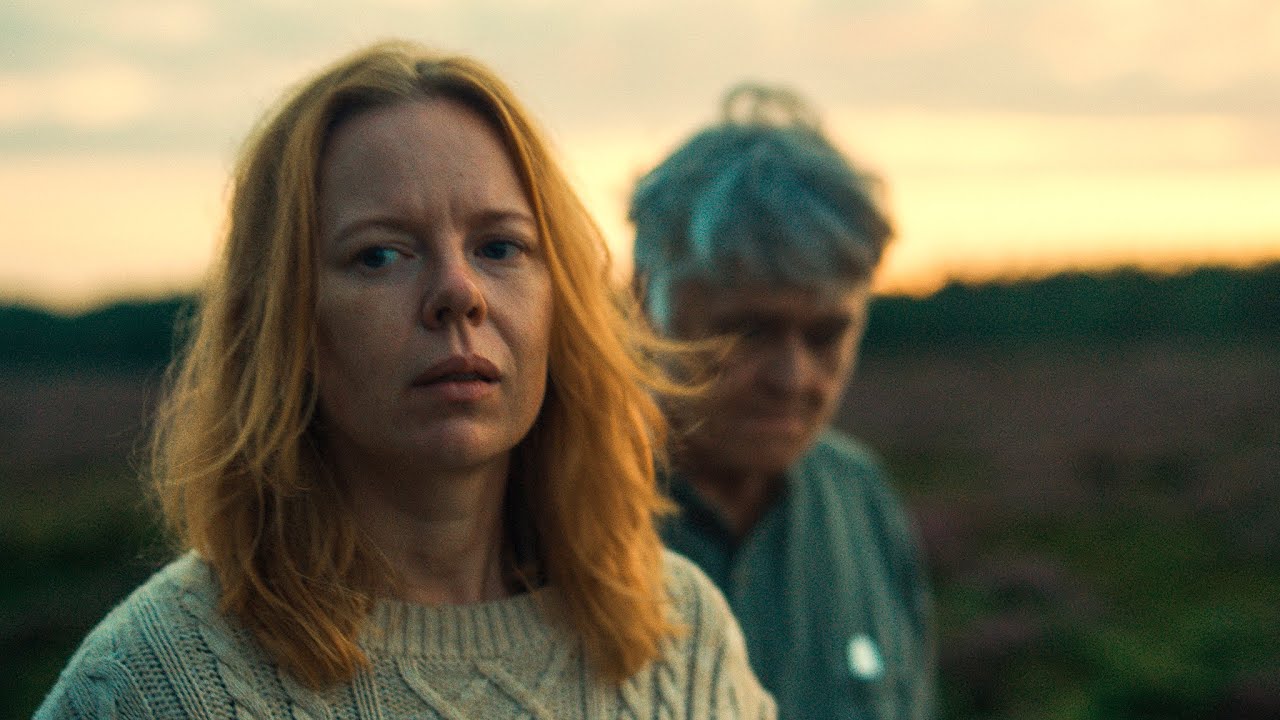
The story follows Nora (Alma Poysti), an opera singer who arrives on a remote island to bury her late husband in a private ceremony. Her journey brings her into contact with Natalia (Pirkko Saisio), a local priest whose austere exterior shows a past of struggle. The relationship between these two women becomes the emotional core of the film, as they connect through their shared yet distinct experiences of loss and alienation. Through their interactions, the film highlights philosophical and ethical discussions about guilt (was Nora responsible for her husband’s death?) and broader questions about faith, acceptance, and the societal structures that marginalize those who don’t fit neatly within them.
Honkasalo, known for her critically acclaimed documentaries like The 3 Rooms of Melancholia (2004), returns to narrative filmmaking with Orenda, marking her first feature since Concrete Night (2012). Where that earlier work explored themes of masculinity and youth, Orenda shifts focus to the inner lives of women grappling with trauma and rebuilding themselves from grief. The film’s screenplay, written by frequent collaborator Pirkko Saisio, feels almost novelistic in its structure, revealing details sparingly and allowing the audience to piece together the backstories of Nora and Natalia over time. This approach can be frustrating at first, particularly when the dialogue leans toward abstraction (“the recurring, ferocious dance of birth and death”), but it ultimately pays off as the characters’ histories come into sharper focus.
One of the most compelling aspects of Orenda is its exploration of Christianity and the tension between institutional rigidity and personal spirituality. Natalia, as a female priest, embodies this conflict. She faces rejection not only from her religious community but also from society at large, leading to a sense of isolation that manifests in self-destructive behavior. Flashbacks reveal glimpses of her past, showing how an environment of exclusion have shaped her worldview and strained her faith. Saisio’s performance captures this internal struggle with remarkable nuance. Her stoicism masks a deep sense of pain, which she conveys through subtle shifts in expression and tone. Opposite her, Alma Poysti delivers a beautifully restrained portrayal of Nora, whose vulnerability make her a perfect foil for Natalia’s hardened resilience.
Visually, Orenda is stunning. Honkasalo employs a realist audiovisual style, focusing on the island’s natural landscapes and the sounds of its environment. The juxtaposition of these serene, almost meditative visuals with the weighty philosophical dialogue creates an intriguing tension. Nature itself seems to echo the emotional states of the characters—the relentless waves, the windswept cliffs, and the muted colors of the island all contribute to the film’s somber tone. At times, hints of magical realism creep into the narrative, though these elements remain vague and open to interpretation until late in the film. This ambiguity certainly adds another layer to this film about spirituality but may leave some viewers yearning for more concrete answers.
With its slow and elusive pace and structure, Orenda demands patience and engagement from its audience. Its philosophical musings and fragmented storytelling may alienate viewers looking for a more straightforward narrative, but for those willing to immerse themselves into its ambiguities, it offers an exploration of universal themes that are sure to spark a connection between the characters and the spectator.
“Orenda” premiered at the 2025 International Film Festival Rotterdam as part of the festival’s Big Screen Competition.
 obviouslyreviews.com