
TIFF
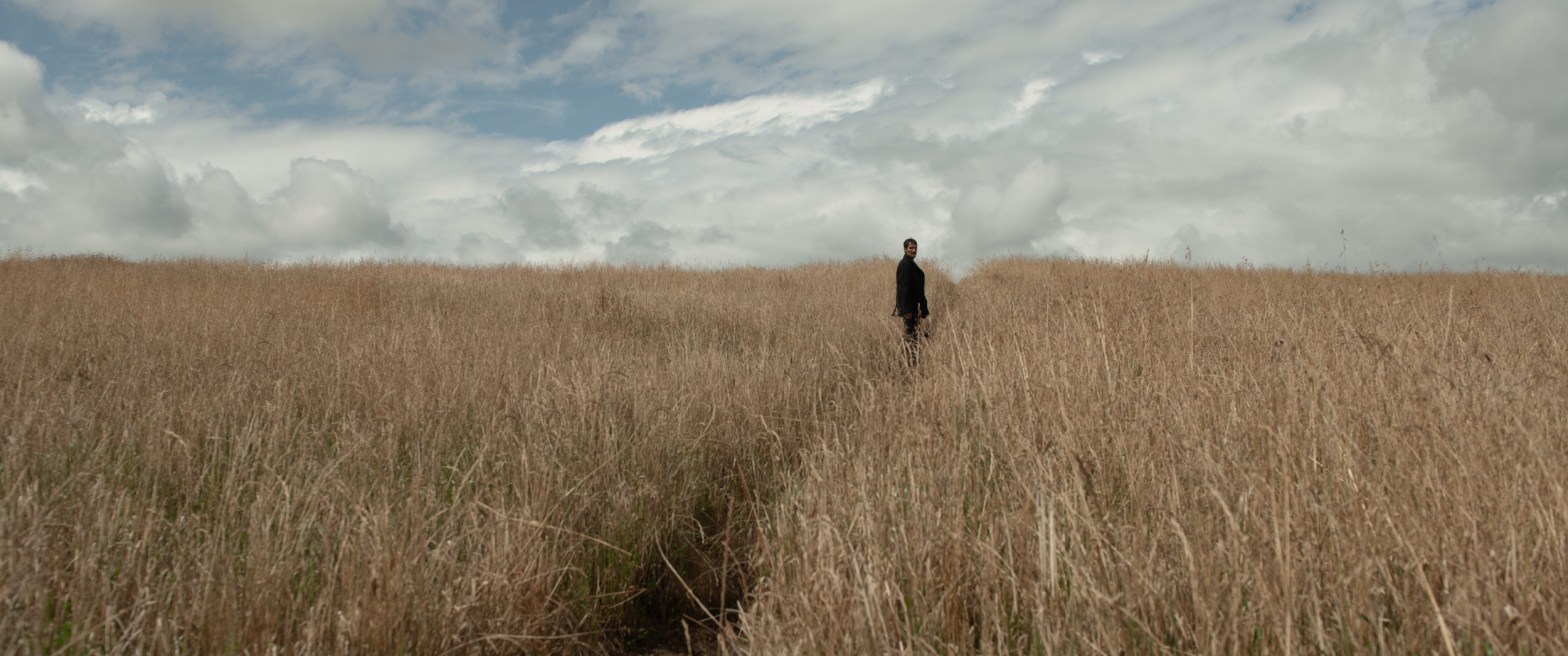
César Augusto Acevedo, the acclaimed Colombian director behind “Land and Shade” (winner of the Caméra d’Or at Cannes in 2015), returns with his long-awaited follow-up, “Horizonte,” a haunting and poetic exploration of loss, memory, and redemption. The film tells the story of two ghosts -a mother, Inés, and her son, Basilio- as they wander through a war-torn world in search of the man’s missing father. Their spiritual journey, traversing the desolate, misty landscapes of a city torn apart by conflict, uncovers the wounds left by war.
Directed by: César Augusto Acevedo
Year: 2024
Country: Colombia, France, Luxembourg, Chile, Germany
Runtime: 125 minutes
Acevedo sets the tone with striking visual exposition: a misty graveyard, where Basilio (Claudio Cataño) looks for a woman named Inés Soto. A passerby questions him, asking if he is certain that she is dead. This ambiguity immediately invites viewers into a liminal space, where the line between the living and the dead blurs and where memories are both a comfort and a curse. We soon learn that Inés (Paulina García) is Basilio’s mother, who he’s been without longer than with during life. Basilio, a soldier while alive, has lots of explaining to do and takes Inés on a journey through both past and present to explain his deeds and the motivations behind them.
The film paints a world soaked in shades of dreamlike misty blue, with walls permeated by bullet holes, reflecting a dead city that breathes in violence and exhales despair. When Basilio finds his mother’s garden, once vibrant and filled with flowers she tenderly cared for, now barren and lifeless, it becomes an impactful symbol of the passion and lust for life war has taken from the ones affected by it. The ghosts can see the living without being seen, moving through places where events have occurred in both past and present, all the while sharing fragmented memories and uncovering truths.
Acevedo exhibits immense skill through his use of sound as much as in his imagery. The past is often recounted through evocative asynchronous soundscapes rather than shown directly. The audience hears, rather than sees, the horrors of war; the awful cries, the echo of gunfire, and finally the silence that follows a death. This technique allows the viewer to feel the lingering weight of the memories that haunt Inés and Basilio without the director exploiting the gruesome imagery of the real-life war.
A recurring theme in the film is the cyclical structure of violence and suffering. Basilio speaks of soldiers, saying, “In war, hope is like a cut at the sole of your foot. The more weight you put on it, the deeper the wound grows.” The ghosts wander through rooms filled with the dirty clothes of the deceased and piles of discarded guns relics of lives and conflicts long gone that shock Basilio’s mother when she learns that her son was part of the group that inflicted this damage. While on their journey through limbo, Basilio meets the ghosts of several people he has harmed, hoping to find peace for himself and his mother. It is in these moments that the film meditates on the futility of vengeance and the possibility of redemption.
With “Horizonte,” Acevedo offers a somber reflection on what it means to search for redemption in a world scarred by trauma. The film challenges viewers to reflect on whether it is possible to mend the bonds between people and, on a broader scale, between a nation and its people. Through its careful pace, atmospheric depth, and stunning performances by both leads, “Horizonte” powerfully presents a glimmer of hope in times of war, even when it feels like a wound that only deepens with time.
“Horizonte” premiered at the 2024 Toronto International Film Festival as part of the festival’s Discovery lineup.
 obviouslyreviews.com