
Horopter Film Production
In “Possibility of Paradise”, Serbian documentarian Mladen Kovačević presents a bold, unconventional exploration of human desires and ambitions, set against the backdrop of Bali, Indonesia. The film is divided into a series of seemingly unrelated vignettes, each highlighting a different individual or group in search of their own version of paradise. An unconventional structure and observant, non-interfering camera heighten the film’s existential and philosophical undertones, inviting viewers to engage deeply with the questions it poses, rather than providing easy answers.
Director: Mladen Kovačević
Year: 2024
Country: Serbia, Sweden
Original Title: Mogućnost raja
Runtime: 75 minutes
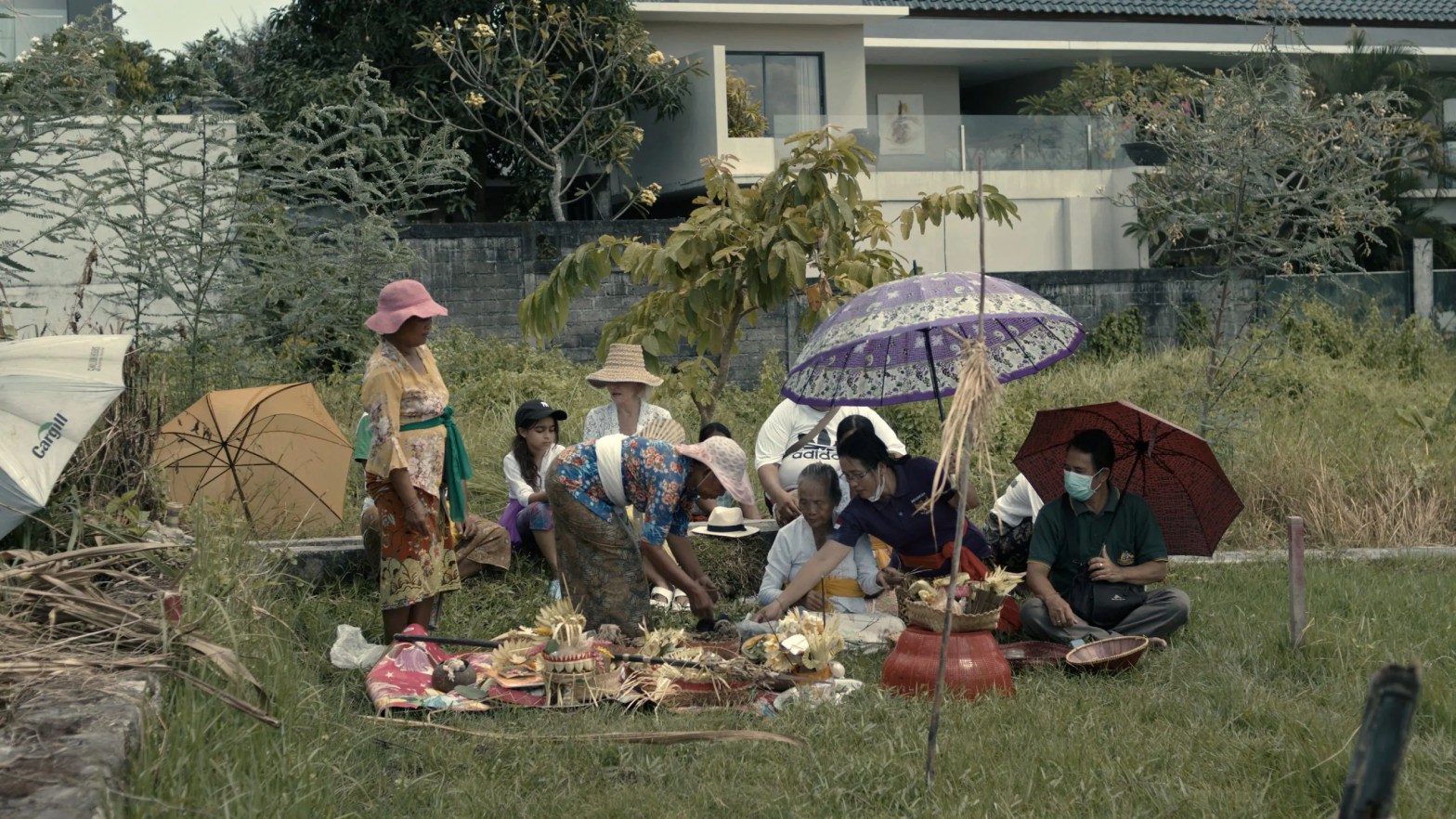
Kovačević introduces us to a diverse range of personalities, each on a unique journey to create their own ideal world. The film starts with a group of young schoolgirls waiting for the rain to cease on the mountains. Some other characters with their own segment are a former advertising executive who secures a land deal for her new villa, illustrating the commercial ambitions often disguised as personal fulfillment. Meanwhile, an entrepreneur is set to construct a resort deep in the jungle. Elsewhere, a veterinarian cleans snakes from foreign-owned gardens, a vivid image of local labor maintaining the curated paradises of outsiders. A father and son prepare to leave the island without knowing where they will go next after their stay has proven to be unfulfilling, while Western divers risk their lives to make a discovery in the sea. Each of these stories speaks to the human drive to find -or fabricate- a sense of paradise.
Kovačević’s approach is strikingly minimalist and provocative. By avoiding a linear narrative and refraining from imposing any clear-cut message, he creates a work of pure realism that demands active engagement from the audience. There are no names, no backstories, and no clear resolutions. Instead, the film presents life in its raw, fragmented form, leaving viewers to analyze the deeper implications of the scenes. It’s a bold choice that pays off and offers a fresh and highly stimulating take on the documentary form.
A particularly striking moment arises when a child asks her mother why certain animals eat certain things and not others. This seemingly simple question leads to a range of deeper inquiries: Why do we, as humans, pursue the things we do? Are our desires and actions driven by free will, or are we merely following a set of preordained patterns like other animals? This existential questioning runs like a red thread through the film, encouraging viewers to reflect on the nature of desire, ambition, and what it means to seek “paradise.”
Colonialism and imperialism subtly permeate the film, providing a commentary on the legacy of foreign influence in Indonesia. The presence of Westerners in Bali, seeking their own versions of paradise, often at odds with the local environment and culture, highlights a continuation of colonial patterns. This is captured in scenes such as a woman employing local workers to remove a snake from her garden, thus eradicating a natural part of the land to shape her version of an ideal life. Similarly, another woman practicing “conscious coaching” could perhaps represent the imposition of Western ideals and values in a non-Western context, shaping perceptions of what paradise should be.
“Possibility of Paradise” is a deeply philosophical film that raises more questions than it answers. Kovačević has created a work that, in just over an hour, examines the complexities of human aspiration, the ethics of creating a personal “paradise,” and the sacrifices we make in pursuit of dreams that may themselves be but an illusion The director’s film is a fascinating exploration of the nature of desire, the impact of external influences, and the ever-elusive quest for personal utopia.
“Possibility of Paradise” premiered at the 2024 Venice Film Festival where it screened as part of the Special Events selection at the Giornate degli Autori.
 obviouslyreviews.com