
MLD Films
“Super Happy Forever,” by Japanese filmmaker Kohei Igarashi, is a beautifully tender and subtle exploration of grief, coincidence, and how our relationships with those we’ve lost continue to exist in the small, everyday things that remind us of them.
Director: Kohei Igarashi
Year: 2024
Country: France, Japan
Runtime: 94 minutes
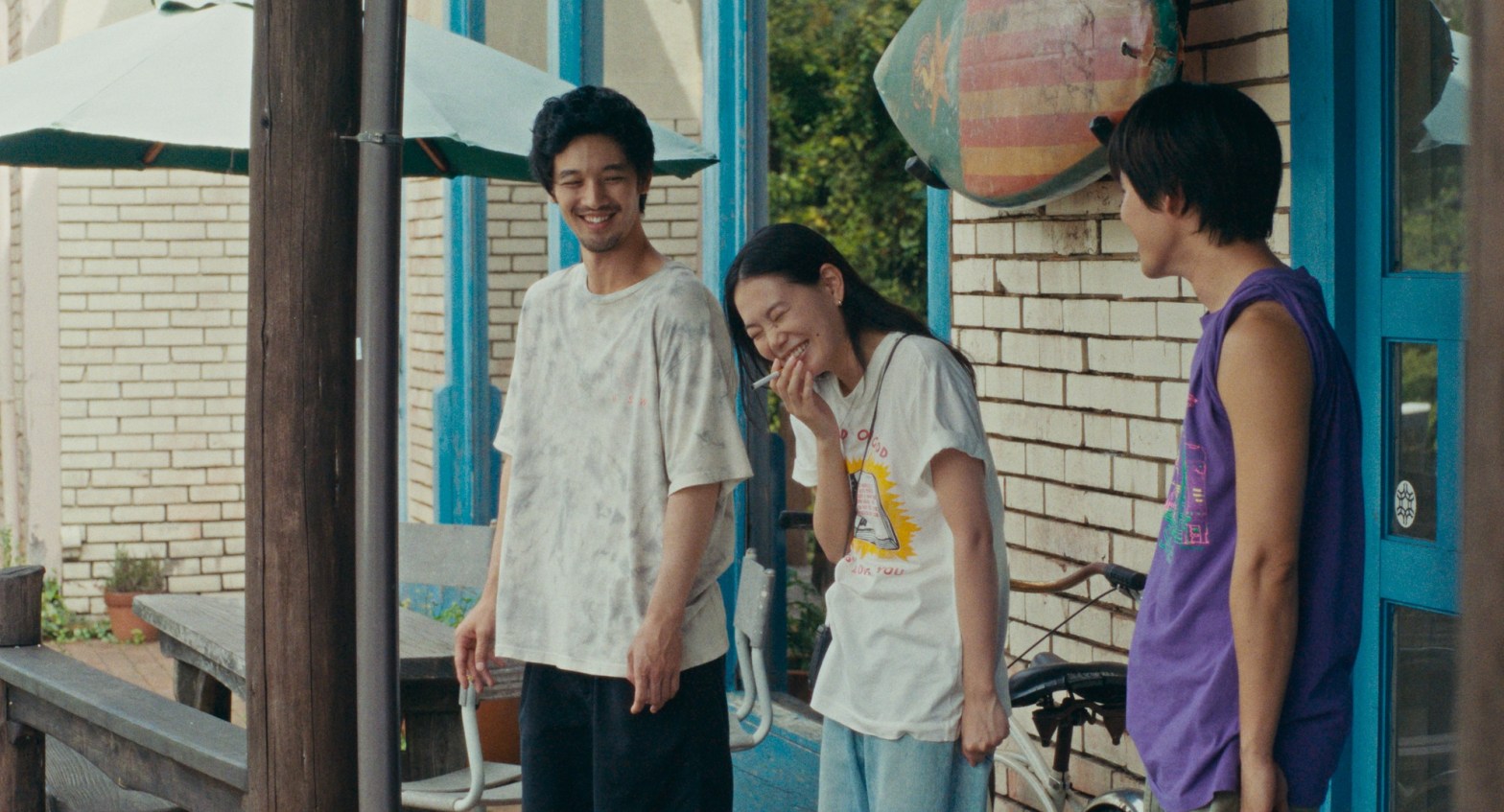
Igarashi’s film is divided into two distinct halves. The first half centers on Sano (Hiroki Sano) and his friend Miyata (Miyata Yoshinori), who find themselves in a hotel room in the city where Sano and his late wife, Nagi, fell in love five years earlier. Although the film opens with visuals of a bright, sunlit setting, the sea, and the sounds of birds, this picturesque scene quickly reveals itself as the backdrop to a story drenched in melancholy. There is a quiet sadness that fills the atmosphere, mirroring Sano’s seemingly apathetic, agitated, and pessimistic demeanor. Through this quiet, almost subdued lens, we learn that Sano is grieving the loss of his wife, Nagi, who has recently passed away in her sleep. He returns to this place, accompanied by his friend, to confront his sorrow.
The second half of the film takes the viewer back in time to when Sano and Nagi (Nairi Yamamoto) first met. Here, Igarashi’s narrative approach comes into full view. Seemingly random events from the first half like Sano’s sudden decision to sing a particular song during karaoke, his emotional reaction to a hotel cleaner humming a tune, or the search for a red cap, are revisited with new context. These moments, which appeared arbitrary at first, are now imbued with deep emotional significance, demonstrating how the most mundane events and occurrences can hold significant meaning when attached to the memory of a loved one.
Igarashi’s screenplay brilliantly examines the concept of coincidence, exploring how these occurrences shape our lives and help us connect to others. In the film’s first half, we are introduced to Miyata, Sano’s friend, who is overly enthusiastic about positivity and finding significance in every aspect of life. After attending a seminar, he has embraced the philosophy of a movement called SHF (Super Happy Forever) which promotes a radically positive attitude and symbols like rings that signify their belief in synchronicity and meaningful coincidences. Initially, this concept feels almost cult-like – contrived, forced, and even laughable, as Sano himself reacts with cynicism and disdain.
However, in the second half, we learn that Sano and Nagi’s relationship is also marked by a series of coincidences: the reasons they both ended up in the same place at the same time, the instant connection they felt, their seemingly random similarities (even sharing the same name) that deepened their bond, and the memories and objects that bring Sano solace after Nagi’s passing. These coincidences, unlike the forced beliefs of SHF, are portrayed as natural and organic—an essential distinction Igarashi makes. Rather than imposing meaning on random events, it is more meaningful to embrace coincidences as they occur, appreciating the beauty they bring to our lives. Throughout the film, these moments unfold with such authenticity and warmth that they turn the narrative into a playful and detailed puzzle, inviting us to embrace the unexpected and cherish the little things when they happen.
“Super Happy Forever” reminds us how the seemingly random moments in our lives, those small, unnoticed events, often lead us to greater things, such as love and meaningful connections, without us even realizing it. Igarashi’s film captures how everything we experience continues to live on through our connections to people, places, sounds, and objects, whether through our own memories or through someone else who carries them forward. The film encourages us to see the beauty in life’s coincidences and to appreciate the persisting impact of those we have loved and lost
“Super Happy Forever” premiered at the Venice Film Festival where it screened as the opening film of the Giornate degli Autori sidebar
 obviouslyreviews.com