
Eclectica
Bruno Anković’s debut film “Celebration,” which premiered at the Karlovy Vary International Film Festival (KVIFF), is a haunting exploration of moral ambiguity and historical trauma. Set from pre- to post-World War II Croatia, the film delves into the stark and brutal world of Mijo, a man caught in the desperate struggle for survival during a time when his country was torn apart by political and ideological conflict. With its elliptical narrative and unsettling themes, Celebration offers a grim meditation on how suffering and desperation can trick one into following the dark path of fascism.
Director: Bruno Anković
Year: 2024
Country: Croatia, Qatar
Original Title: Proslava
Runtime: 86 minutes
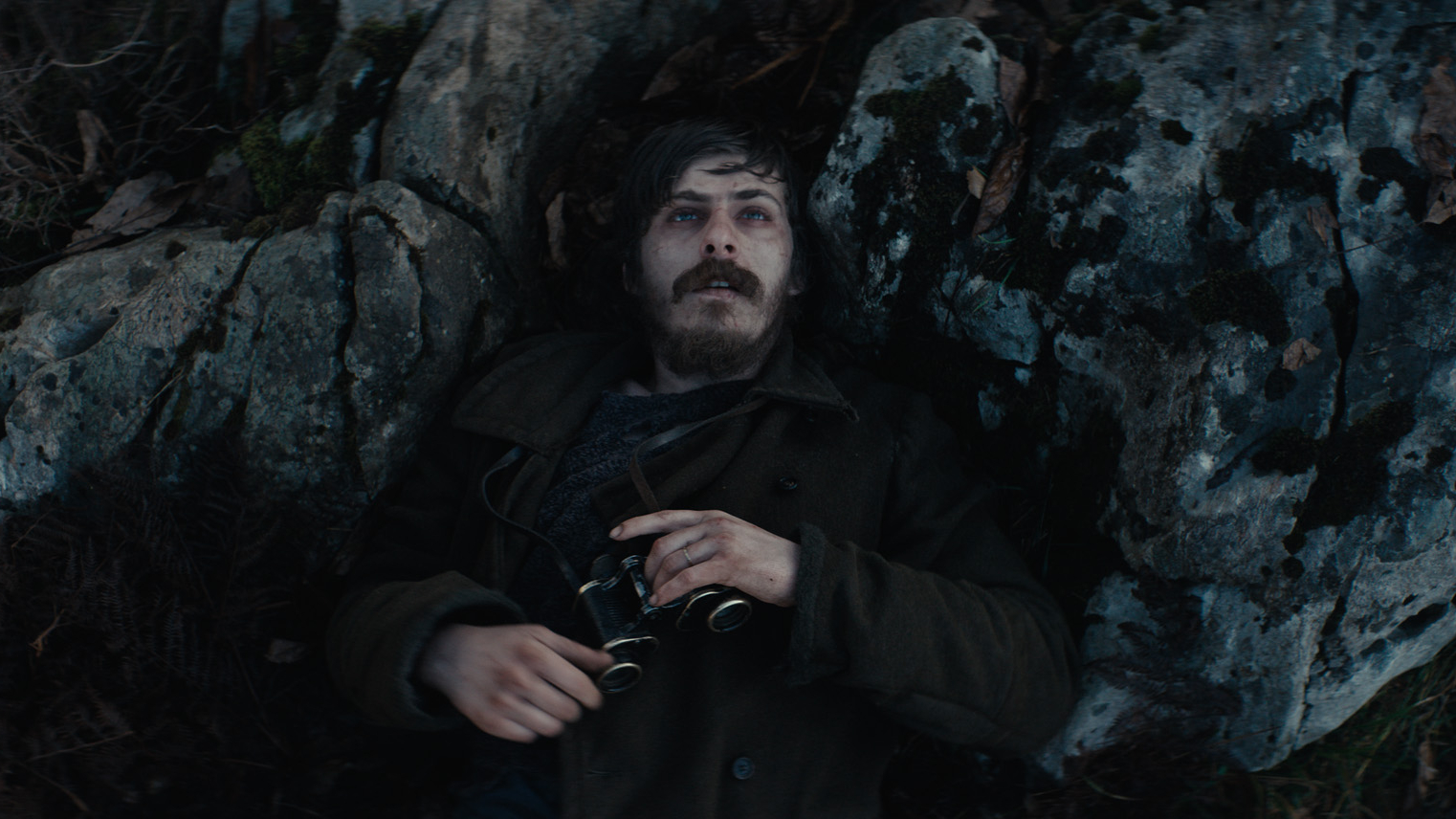
The film opens in the autumn of 1945. The sense of dread is immediate. Mijo (Bernard Tomic), deprived of food and water, is hiding in a forest from a group of soldiers. The threat of capture hangs heavily over him as he is aided by his girlfriend Drenka (Klara Fiolic), who urges him to surrender. In a tense exchange, the dialogue alludes to a “celebration” that has happened, where a man from the city proclaimed the state’s existence and issued a warning against communism, equating it with moral decay. The film’s opening sequence, marked by chaotic camera movements, heavy breathing, and an overwhelming soundscape, sets the tone for what is to come, a visceral, immersive experience that refuses to let the viewer feel comfortable.
Anković’s decision to employ a non-chronological narrative structure works well to explore the depth of Mijo’s character and the choices he has made, or rather what he has been tricked into doing. The story jumps back and forth in time, revealing pivotal moments that shaped Mijo’s fate. We are taken to the summer of 1933, where Mijo, desperate to protect his dog Garo from the orders of a cruel gendarme, makes a fateful decision. Then, in winter 1926, we see a young Mijo witness his father’s desperate act of leaving his sick grandfather to die in the mountains, a moment that encapsulates the harsh realities of poverty and survival Mijo has had to endure. These flashbacks offer insight into Mijo’s motivations and the seeds of hopelessness that eventually lead him to support the fascist Ustaša organization in the hopes of improving his own situation.
The film’s titular celebration occurs in the spring of 1941, a central moment that cements Mijo’s arc, blinded by a hopeful prospect into pledging allegiance to the Ustaša. It’s a dark turning point where Anković carefully handles the moral complexity of his protagonist. Mijo’s descent into fascism is portrayed not as an act of deliberate evil, but as a tragic consequence of his suffering and disillusionment. Anković walks a thin line here, ensuring that while the audience empathizes with Mijo, they are also repulsed by the choices he makes. The immediacy of the final act disturbs, forcing viewers to confront how easily one can be manipulated into supporting a fascist ideology when faced with unbearable hardship.
Cinematographically, Anković does an excellent job in creating atmosphere and tension. The wide, open shots of the Croatian wilderness juxtaposed with claustrophobic close-ups create a sense of both freedom and entrapment within this wide space. The chaotic camera movements mirror Mijo’s inner panic, while the sound design, particularly the rain, loud gunfire and voices in the distance, heightens the immersive experience. It’s a film that is as much about what is heard as what is seen, with every sound adding to the oppressive atmosphere that surrounds Mijo.
“Celebration“ is a bleak, unsettling, exploration of the moral compromises people make when pushed to the edge, allowing themselves to be used as puppets by those who promise them a better future. Anković’s debut is a bold, atmospheric film that challenges viewers to reflect on the dangers of ideological extremism and the ease with which one can slide into supporting something monstrous in the face of personal suffering. It’s an ever-timely cautionary tale that serves as a stark reminder of the way fascism creeps its way into the lives of those who suffer and the seductive allure of its false promises.
“Celebration” premiered at the Karlovy Vary International Film Festival (KVIFF) where it screened in the Crystal Globe Competition.
 obviouslyreviews.com