
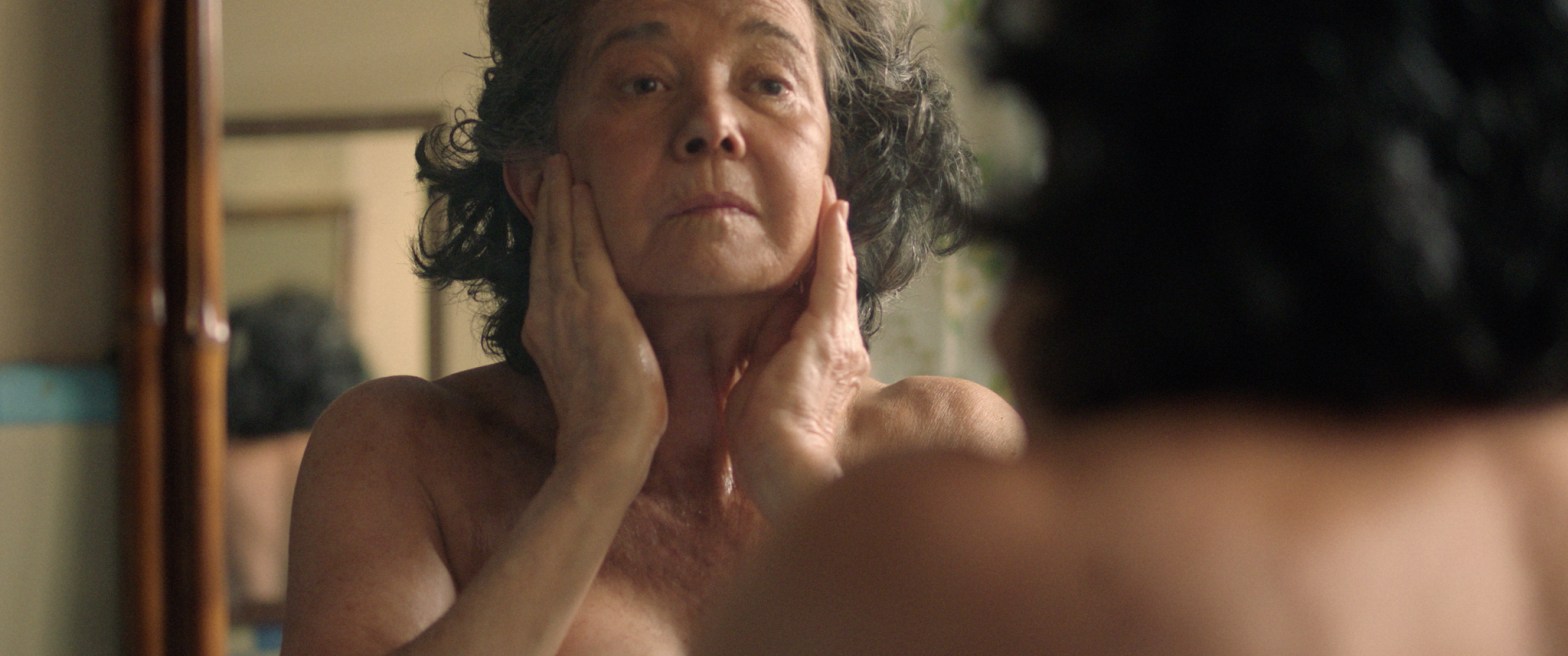
© Substance Films
“Memories of a Burning Body,” the sophomore feature by director Antonella Sudasassi Furniss, where the Costa Rican director once again takes the stage at the Berlinale Film Festival, shines with the director’s powerful approach to storytelling. Following the acclaim of her first feature, “The Awakening of the Ants,” for its strong feminist lens, Sudasassi Furniss returns with a narrative that pushes the boundaries of how the internal world of women, particularly those of advanced age, is portrayed in cinema even further.
Directed by: Antonella Sudasassi Furniss
Year: 2024
Country: Costa Rica, Spain
Length: 90 minutes
The film, playing in the Panorama section, serves as a liberating outlet for three elderly women, Ana (68), Patricia (69), and Mayela (71), allowing them an unfiltered platform to discuss their lives. From childhood memories to their current state, these women cover an array of subjects including dreams, first love, menopause, the difficulties of aging, loneliness, desires, and most importantly, sex. It’s incredibly refreshing and liberating to hear these women, who grew up in an exceedingly Catholic, male-dominated, repressing society, speak so openly about a subject still seen as taboo: elderly women talking about their sexual desires and sex life. This candidness is a true testament to a movement of self-liberation present in so many women.
To protect their identities and to let them speak in anonymity, the women are presented to us exclusively through voice-over—a decision that works really well because it gives the women autonomy but also allows Sudasassi Furniss to be creative in how she visualizes the experiences the women talk about. Here, most of the experiences that we hear are played out by actress Sol Carballo, who subsequently plays out the lives of all three women. This approach may come off as chaotic and unstructured at first, as the three women speak interchangeably, but the seamless editing by Ana Pfaff results in all the scenes transitioning into the other so smoothly, creating a poetic tapestry of female experiences. Furthermore, to have the experiences of three women acted out at the same time through a single person allows the viewer to see how universal their experiences are, which makes it ever-relatable.
The film regularly shifts between present and past, illustrating how the past lives on in both present and future, how various forms of oppression recur during different life stages, and how the past informs the way we live our current lives. A recurring theme in the film is the concept of the women’s mouths being shut, most prevalently and harrowingly portrayed during the aftermath of a sexual assault, where the women are told to stay silent and keep their experiences to themselves, haunting them to this day. However, Sudasassi Furniss offers the most powerful platform possible by allowing the women to tell the world everything.
That’s why “Memories of a Burning Body” is so crucial: it encourages people to speak up about what happened to them, their feelings, and their fight for liberation. By allowing these women to share their stories without constraints, Sudasassi Furniss not only pays homage to their lived experiences but also champions a larger movement towards self-liberation and empowerment. This film is a bold reminder that stories of aging, desire, and resilience are worth telling and hearing, offering a liberating perspective that challenges societal norms and opens up a space for conversations that are long overdue.
Memories of a Burning Body premiered at the 2024 Berlinale Film Festival as part of the festival’s Panorama selection.
 obviouslyreviews.com