
© Icarus Films
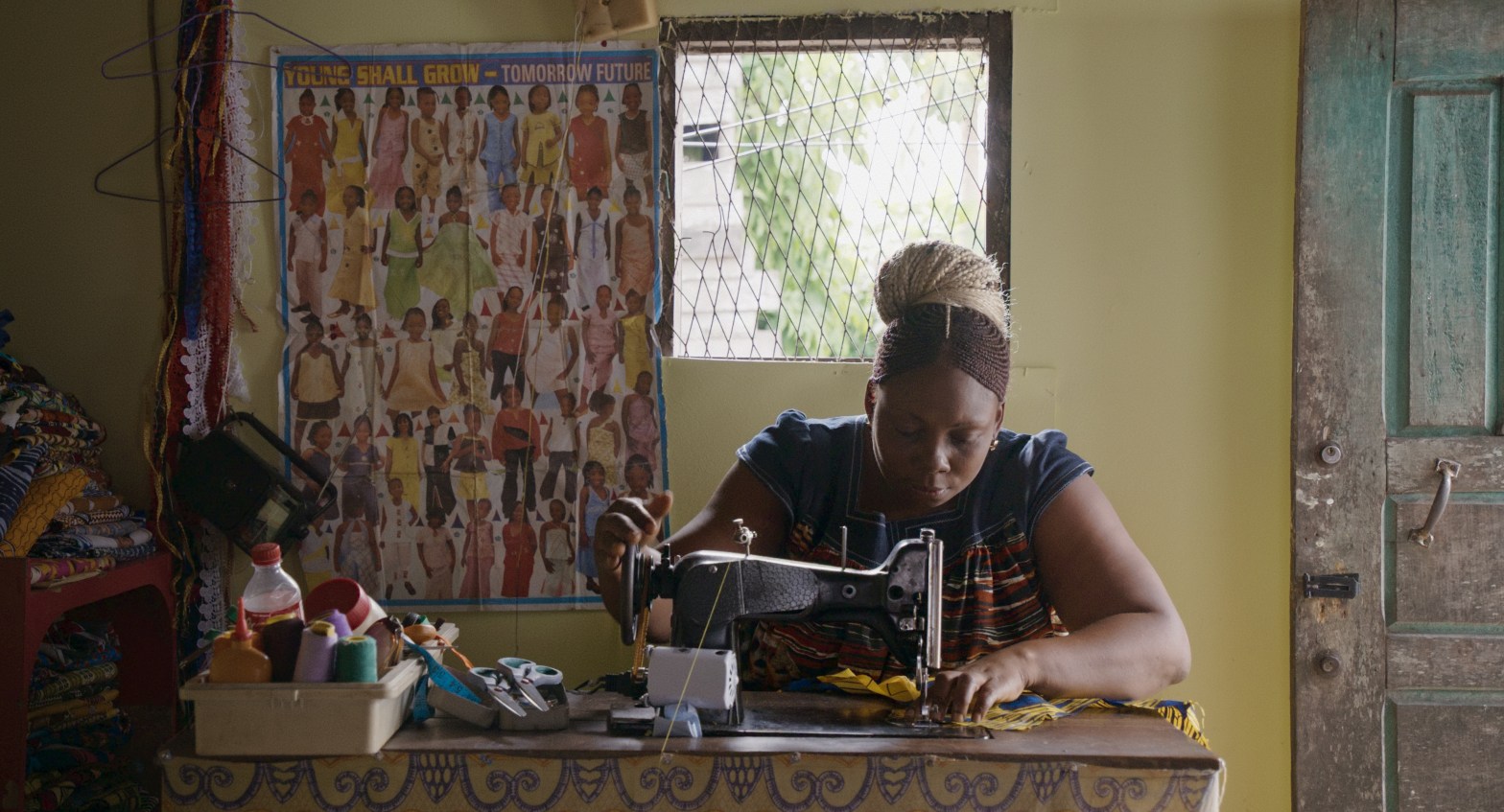
Cameroonian-born, Belgium-based director Rosine Mbakam, known for her documentaries, makes a noteworthy venture into fiction with her debut narrative feature “Mambar Pierrette.” The film blends narrative storytelling with documentary-style elements to offer a genuine and authentic portrayal of everyday life in Douala, Cameroon. It avoids clichés and offers a nuanced perspective on the struggles and triumphs of the local community through the eyes of a dressmaker who plays a vital role in her community.
Directed by: Rosine Mbakam
Year: 2023
Country: Cameroon, Belgium
Length: 93 minutes
At the film’s center lies the city of Douala, anticipating the upcoming school year. At Pierrette’s humble workshop, people from all backgrounds seek her expert tailoring for their upcoming events. However, Pierrette’s work transcends mere tailoring. She serves as a beacon of emotional support, offering guidance and solace to her clients as they navigate their own personal battles. Her workshop provides a sanctuary where people can confide in her and find comfort in her wisdom.
Mbakam’s storytelling style is characterized by its masterful restraint, which allows the screen to be filled with true-to-life conversations and mundane activities. Some might find this approach, which features a notable absence of dramatic elements, to appear insignificant, but it is this very focus that gives the narrative depth and allows Mbakam to provide a faithful portrayal of a real-life community. Pierrette’s role grows unspokenly as she lends an empathetic ear to her customers, one of whom discusses the challenges they face in obtaining a European visa. At the end of the conversation, this character remarks that Pierrette ‘looks like she has all Cameroon’s cares on her shoulders’, which beautifully describes Pierrette’s place in the community and what makes her so valuable. The day-to-day interactions between Pierrette and her customers form the foundation of the community and paint a vivid picture of the societal complexities the characters face. Additionally, they demonstrate how small interactions, such as someone sharing their struggles and receiving minor advice or the simple act of listening, can make a significant difference. The film is profoundly humanistic in the way it explores the way in which individuals are part of a community.
Yet Pierrette is more than just a compassionate seamstress; she’s a robust, multi-faceted character. The film explores her personal hardships and presents her as a strong well-rounded figure. A significant point arrives when she is robbed, accentuating her vulnerabilities and struggles with societal expectations, including financial instability, raising three children by herself, dealing with heavy rains that threaten to drown her workshop, and the overall difficulties of living in a patriarchal society as a woman. Despite facing so many challenges, Pierrette shows her assertiveness by asking for help when needed, sharing her own struggles and stories with others, and firmly holding her ground when customers attempt to negotiate prices. Her self-respect and determination shine through this very nuanced portrayal, as she embodies a complex interplay of roles, from provider and confidant to a woman standing her ground amid life’s many trials.
In her debut performance, Pierrette Aboheu Njeuthat, who also happens to be the director’s cousin, plays the role of Pierrette with sincerity and warmth, making it the heart of the movie. Her performance ingeniously handles the complexities of Pierrette’s character and the many emotions she experiences throughout the film. Whether in its heartwarming or emotionally bleak scenes, Njeuthat never ceases to be impeccable, as if she has been acting forever. The actress’ commanding presence captivates with its genuine emotion, drawing the viewer into an impactful character study. The sense of warmth and sincerity of the character of Pierrette radiates throughout the film because Njeuthat is able to fully convince us.
Balancing documentary-like accuracy with immersive storytelling, it’s crucial to recognize the delicate balance that director Rosine Mbakam strikes. In a less skillful director’s hands, this film might have missed the mark, becoming overly dramatized or artificial. One of Mbakam’s many effective decisions is that she resists making the film’s technical aspects too polished. The visuals maintain a raw quality that’s perfectly in tune with the narrative’s grounded nature. With a less nuanced director at the helm, “Mambar Pierrette” could have been reduced to a caricature of community life in Cameroon, or worse, a typical work of ‘poverty porn’. Instead, Mbakam elevates the narrative through her deep respect for the characters and their environment.
“Mambar Pierrette” screened at the 2023 Toronto International Film Festival as part of its Wavelengths lineup.
 obviouslyreviews.com