
© Pyramide Films
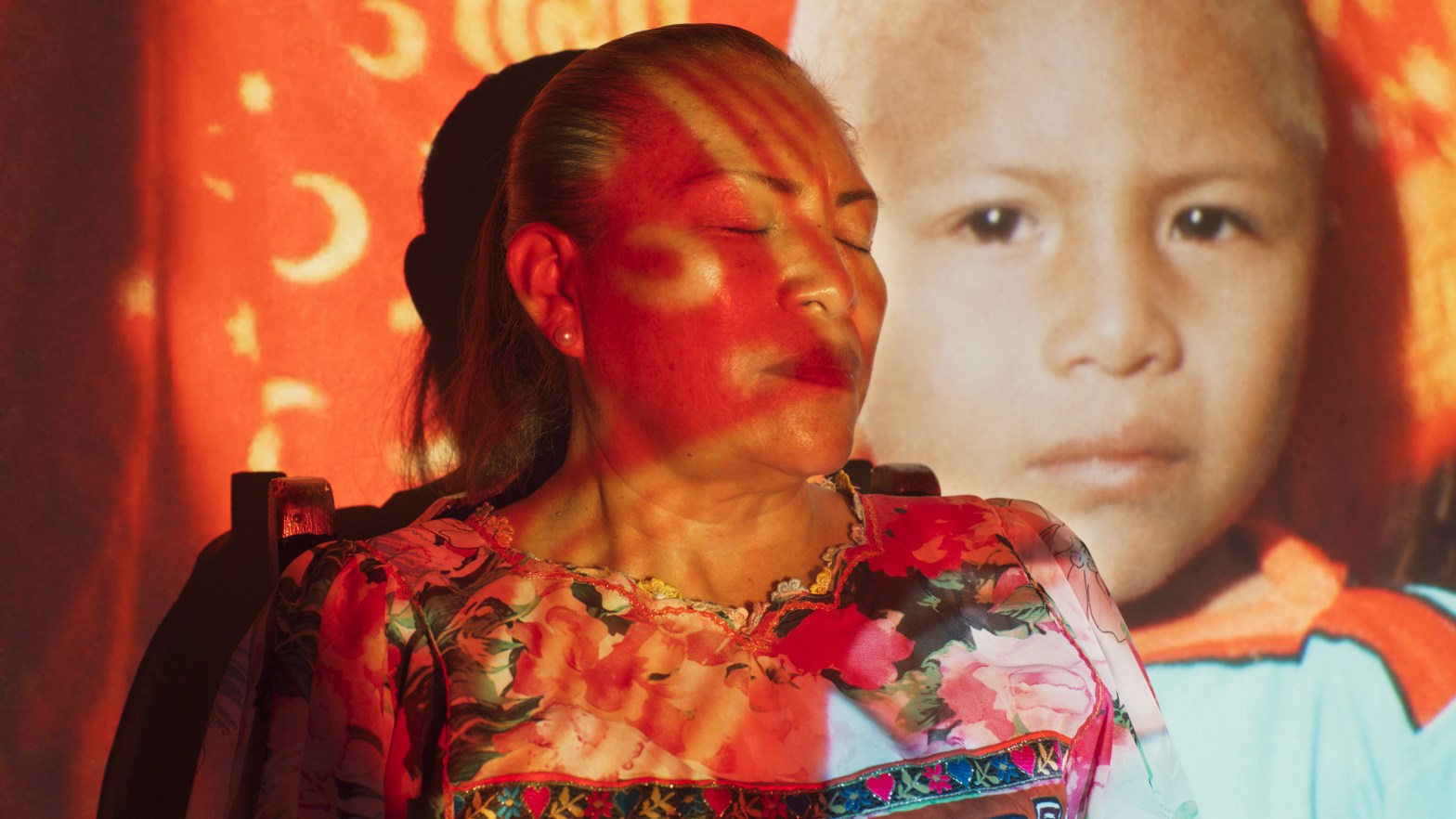
Andrés Peyrot’s “God is a Woman” is an impactful documentary that serves to empower a community, but also teaches an essential lesson about ethical filmmaking. Premiering as the opening film of the Critic’s Week of the Venice Film Festival, this Swiss-Panamanian creation avoids the traditional ‘outsider-looking-in’ approach, instead providing the Indigenous Kuna people of Panama with agency to shape their own narrative.
Original Title: Dieu est une femme
Directed by: Andres Peyrot
Year: 2023
Country: France, Switzerland, Panama
Length: 87 minutes
The film revolves around the Kuna community’s quest to reclaim a film that was supposed to be a mirror to their society but instead was never shown to them. The original 1975 documentary by award-winning French director Pierre-Dominique Gaisseau captured the Kuna people at a defining time in their history but failed to fulfill the promise of sharing the work with the community it portrayed. Through the lens of Peyrot, we follow Arysteides Turpana, a driven Kuna elder, as he navigates bureaucratic labyrinths to locate Gaisseau’s work, stored away in Paris.
Unlike its 1975 French predecessor, which took liberties in crafting an exoticized version of the Kuna community by prioritizing the white Western gaze, “God is a Woman” sets itself apart through its ethical integrity and cultural sensitivity. Peyrot’s approach democratizes the filmmaking process, bestowing the Kuna community with the long-denied authority to tell their story on their own terms and creating a collective effort.
This is not just a film about a search for a lost documentary; it’s a film about reclaiming the right to self-definition. The film strategically opens by presenting memories from Kuna community members, setting a crucial emotional context. Their narrative not only builds up the urgency to locate and watch the original film but also establishes the Kuna people as the documentary’s rightful narrators from the outset.
The emotional climax, a sequence showcasing the community watching the original 1975 film, exemplifies the essence of narrative reclamation. Here, we don’t just see passive viewers; we witness an empowered community finally given the opportunity to review, interpret, and most importantly, to react to their own portrayal. Their array of emotions—ranging from joy to tears—stands as a testimony to the monumental importance of allowing communities to be active participants in their own historical documentation.
The latter part of the film resonates with this empowerment, illustrating a shift where the younger generation takes up the camera. This ties the narrative back to the quest for the original documentary, implying that the future of the Kuna people’s storytelling will be one that they control.
In a world where marginalized communities often find their stories told through the lens of external gazes, “God is a Woman” stands as a beacon of ethical documentary filmmaking. It serves as a lesson and, more significantly, a challenge to filmmakers and audiences alike to reevaluate who gets to be the storyteller in a narrative, and under what conditions.
In conclusion “God is a Woman” is a masterclass in documentary filmmaking for its audacious ethical stance. It raises pressing questions about the ethics of documentary filmmaking and serves as a clarion call for underrepresented communities to reclaim their stories. This is not just a film to watch; it’s a film to celebrate for its enabling of an underrepresented community to reclaim its narrative and, by extension, its history.
“God is a Woman” premiered at the 2023 Venice International Film Festival as the opening film of the Venice Critics’ Week.
 obviouslyreviews.com