
©Punkchart Films
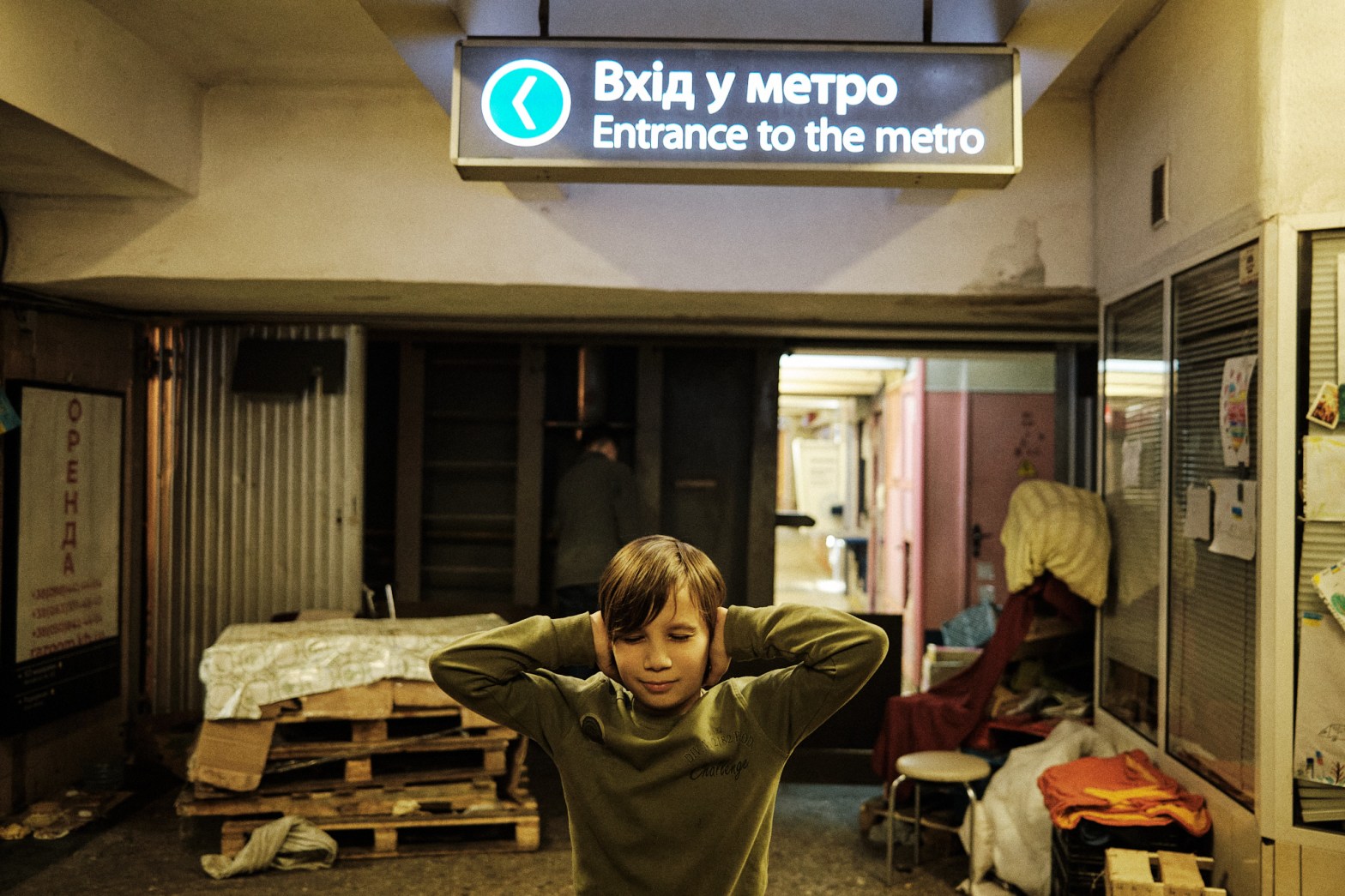
Ivan Ostrochovský’s and Pavol Pekarčík´s documentary “Photophobia” premiered at the Venice Days sidebar of the Venice Film Festival with the intention of giving viewers an intimate look into the lived experiences of war. Centered on 12-year-old Niki and his family, who are confined to a metro station in Kharkiv due to the ongoing conflict between Russia and Ukraine, the film offers strong moments of emotional weight and provides insight into the lives of some of the regular Ukrainian people who are affected by the war. Despite a limiting runtime that unfortunately causes many of the stories to fall short of full realization, the two directors manage to still create a convincing anti-war portrait.
Directed by: Ivan Ostrochovský, Pavol Pekarčík
Year: 2023
Country: Slovakia, Czech Republic, Ukraine
Length: 71 minutes
From its gripping opening scene, the film puts the viewer in the heart of conflict. A demolished stall fills the frame, and men loiter around it, abruptly dispersing at the jarring sound of explosions. This lingering shot serves as a haunting prologue, setting the tone for a narrative that oscillates between the brutality of war and the vulnerability of those most affected by it.
Shot in Heroiv Pratsi Kharkiv metro station, 2.5 km from the fighting contact line between April 22, 2022 and January 2023, little Niki’s journey is the focal aspect of the film. We meet him as he walks through a crowded Kharkiv metro station, populated with people in a state of liminal existence, neither wholly safe nor permanently damaged. Through the lens of a Polaroid camera that the boy has with him, Niki reveals glimpses of the world outside the station, an unsafe place he is forbidden to enter. One of the film’s most memorable images is seen through this sepia-tinted frame: a woman writing “people and children live here” on a wall, as if her words could shield them from the warfare that encroaches upon their sanctuary. Throughout the film, Niki´s story is interspersed with images and videos of people documenting the world while they were still outside, showing the heartbreaking final desperate efforts of people to remain at home while trying to defend themselves from the destruction of war.
Health concerns due to a lack of sun and fresh air add another layer of existential crisis to the film. A visit to the doctor reveals Niki’s vitamin D deficiency, as a result of a lack of sun exposure, a poignant symbol of the deprivation experienced by all the people in the film. Niki and his family have been stuck in the metro station for about a month, and Ostrochovsky and Pekarčík highlight how this not only affects their mental state but also their physical health. This is an anti-war film, not by explicitly critiquing the politics or the military engagements, but by showcasing the unbearable cost paid by the most vulnerable.
The documentary also offers brief, yet profound, snapshots of other individuals: a flirtatious man in a cowboy hat strumming a guitar, and a woman recounting a family member injured by friendly fire. These vignettes serve as narrative echoes, underscoring the universality of human experiences amid chaos. However, clocking in at only 71 minutes, one can´t help but wonder how much more of these interesting people and their experiences there had been to delve into.
The film does more than just document war; it reminds us that even in the subterranean depths of a metro station, beneath the crushing weight of conflict, the human spirit strives, hopes, and seeks connection. Despite its brief runtime, which limits the experiences of people in this war-torn environment to mostly short tableaus, “Photophobia” is a compelling call to witness, and above all, a tragic reminder of the sun that war keeps hidden from us. Its narrative is a vital part of the global conversation on humanity’s collective responsibility toward diplomacy and peace.
“Photophobia” premiered at the 2023 Venice International Film Festival as part of the Giornate degli Autori / Venice Days sidebar.
 obviouslyreviews.com