
©EmoWeemhoff/LemmingFilm
In Stefanie Kolk’s debut feature “Melk,” which premiered at the 2023 Venice Film Festival, emotional resonance emerges not through melodramatic performances or sentimental dialogue but rather through the naturalistic portrayal of the characters and their nuanced relationships. This Dutch entry into the festival serves not only as a profound exploration of grief, womanhood, and life-altering events but also as a keenly observed study of the intricacies of human connection. “Melk” quietly but powerfully delves into the life of Robin, played by Frieda Barnhard, a woman navigating the aftermath of an enormous loss.
Directed by: Stefanie Kolk
Year: 2023
Country: Netherlands
Length: 96 minutes
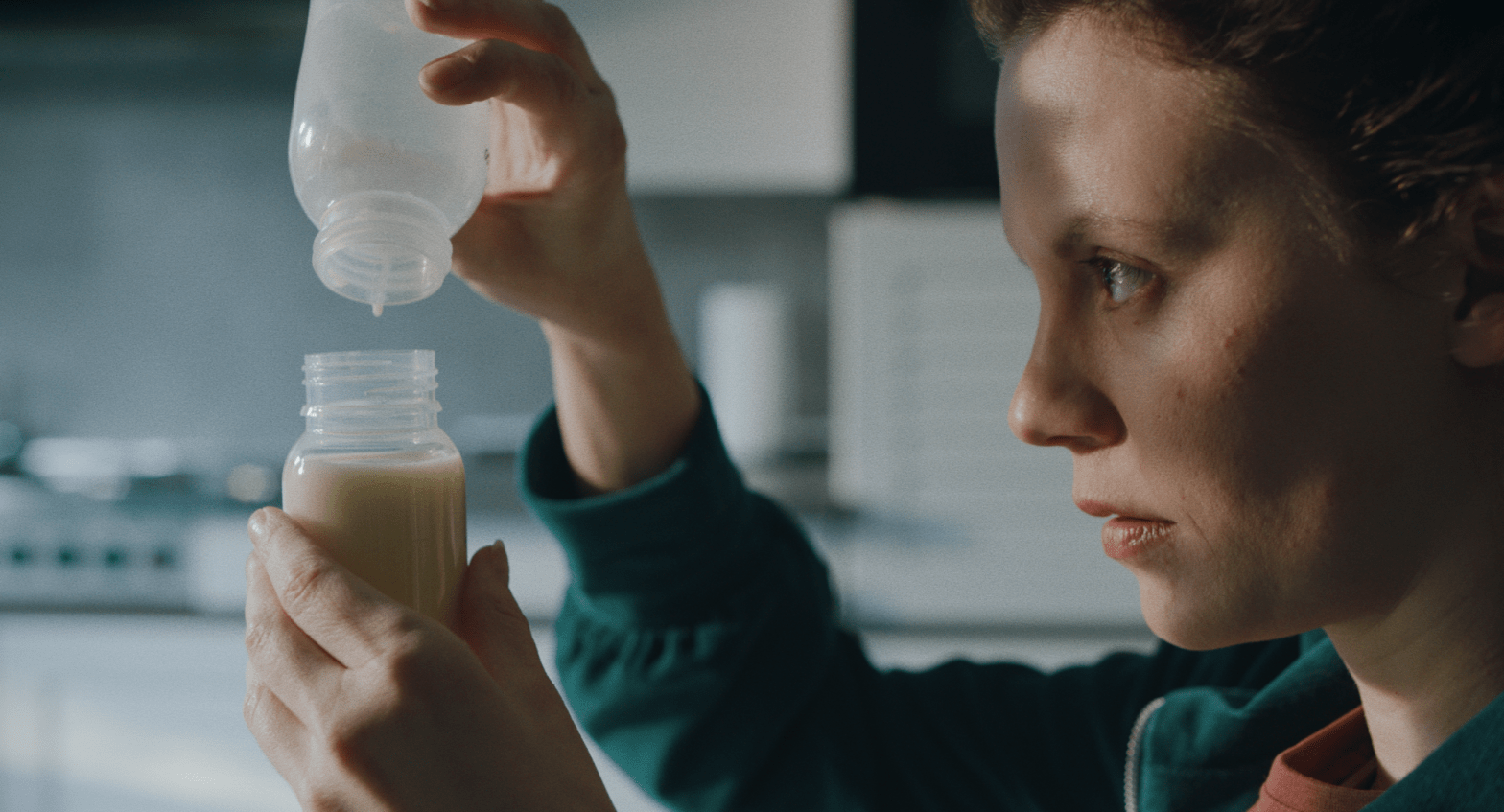
The film orbits around Robin, a 30-year-old woman (Frieda Barnhard), who faces an agonizing emotional journey after giving birth to a stillborn child early on in her pregnancy. Robin’s decision to donate her breast milk, which her body produces despite the absence of her child, becomes a vessel to explore her grief and inability to let go of her child.
Barnhard’s portrayal of Robin exemplifies the film’s naturalistic approach, delivering a performance so nuanced and genuine that it feels like we are watching an intimate documentary. The dialogue across the film shares this quality, steering clear of dramatic flair and instead leaning into everyday language and expressions. When faced with an overwhelming situation, Robin’s stoic utterance, “It is what it is,” mirrors a typically Dutch raw and unfiltered way of handling tough situations, ultimately downplaying the intensity of emotions and performing strength. However, as Kolk presents glimpses of insight into the unraveling psyche of this character, it becomes clear that this is merely a facade. As Robin accumulates several liters of milk, a tangible manifestation of her grief and desperate attempt to hold onto what she had hoped would be her reality, the film raises some fascinating questions regarding the character´s intentions. Is Robin’s decision to donate an act of compassion, or is it a last grasp at control and agency over her body and life?
One of the film’s most striking elements is its use of silence, especially within the “mourning in silence” hiking group Robin joins to grapple with her grief and connect with others. Director Stefanie Kolk exercises masterful restraint here, allowing the silence to become a powerful narrative tool. In the absence of spoken dialogue, the small interactions among the grieving individuals reveal deep layers of empathy, isolation, and understanding. The silence speaks eloquently, creating connections between characters and drawing the audience into their shared emotional sphere.
“Melk” offers a visceral, authentic portrayal of complex human emotions. By focusing on the power of the understated—be it in the naturalistic performances or the eloquent silences—the film presents an evocative story that transcends cultural and linguistic barriers, while staying true to its Dutch roots. It’s not merely a significant addition to Dutch cinema; it’s a universal tale that speaks to the complexities of the human condition when dealing with trauma.
“Melk” premiered at the 2023 Venice International Film Festival as part of the Giornate degli Autori / Venice Days sidebar.
 obviouslyreviews.com