
© Karô Films, Entre Films
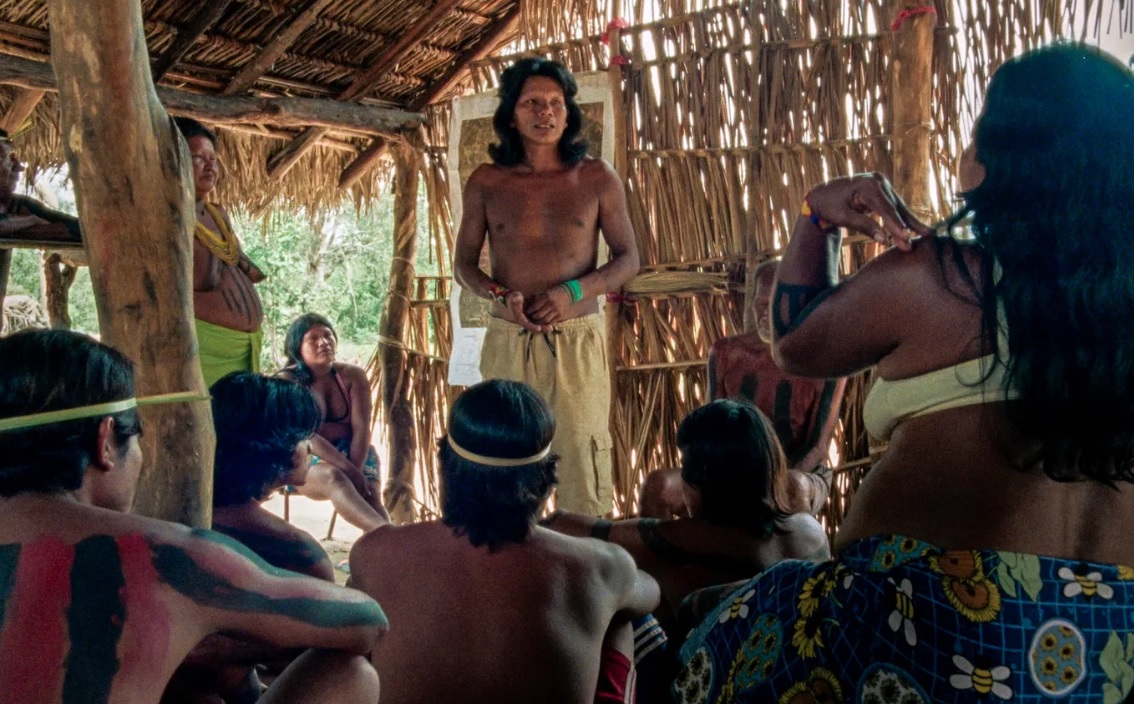
Renée Nader Messora and João Salaviza´s ‘The Buriti Flower’ is an engrossing cinematic experience that had its premiere at the Cannes Film Festival. It weaves a naturalistic narrative around an Indigenous community of the Krahô people in Brazil. While the film occasionally blurs the line between fiction and documentary, it ultimately serves to drive home the poignant realities faced by the Indigenous community and their fight for justice.
Original Title: Crowrã
Directed by: Renée Nader Messora, João Salaviza
Year: 2023
Country: Brazil, Portugal
Length: 123 minutes
The film centers around a character named Patpro, a woman who yearns to vocalize the rights of her community in Brasilia, spurred on by a video of a fellow Indigenous tribe doing the same. The film navigates the tension between her aspirations and the reluctance of her community members to step into unfamiliar territories.
An undercurrent of urgency runs throughout the film, as the community grapples with the threat of extinction, expressed through the ominous line, “One should have kids or our people will disappear.” This urgency is heightened by the consistent violations perpetrated by what the community refers to as the “cupē”. These invaders are shown to plunder resources, particularly the beautiful and intelligent Macaw bird, causing a palpable fear of another massacre among the community.
One of the most striking elements of ‘The Buriti Flower’ is its treatment of its subjects. The camera approaches its characters with profound respect and empathy, letting the people and their actions speak for themselves. The film takes the time to fully realize its characters and setting, thereby fostering a deep audience connection.
The narrative juggles between a stark portrayal of invasion and theft by the cupē and the community’s internal struggles to preserve their cultural heritage. The film starkly depicts the relentless expansion of cupē territory, leading to cattle grazing on the tribe’s land. Despite the grim realities, the film also captures moments of resilience and resistance, particularly during a village feast while under siege.
At its core, ‘The Buriti Flower’ is a harrowing account of a community’s struggle for survival and identity. The characters are shown drafting a document to be presented at a significant meeting in Brasilia, a plea to the chiefs to continue protecting their land. The shared stories from older generations and archival footage serve as poignant reminders of their history, instilling a sense of urgency to their cause.
In conclusion, Renée Nader Messora and João Salaviza´s ‘The Buriti Flower’ is a cinematic tour de force, effectively illuminating the struggles of the Krahô people while honoring their resilience and resistance. It encapsulates the complexities of Indigenous existence and serves as a clarion call for their preservation.
´The Buriti Flower´ premiered at the 2023 Cannes Film Festival as part of the Un Certain Regard competition.
 obviouslyreviews.com