
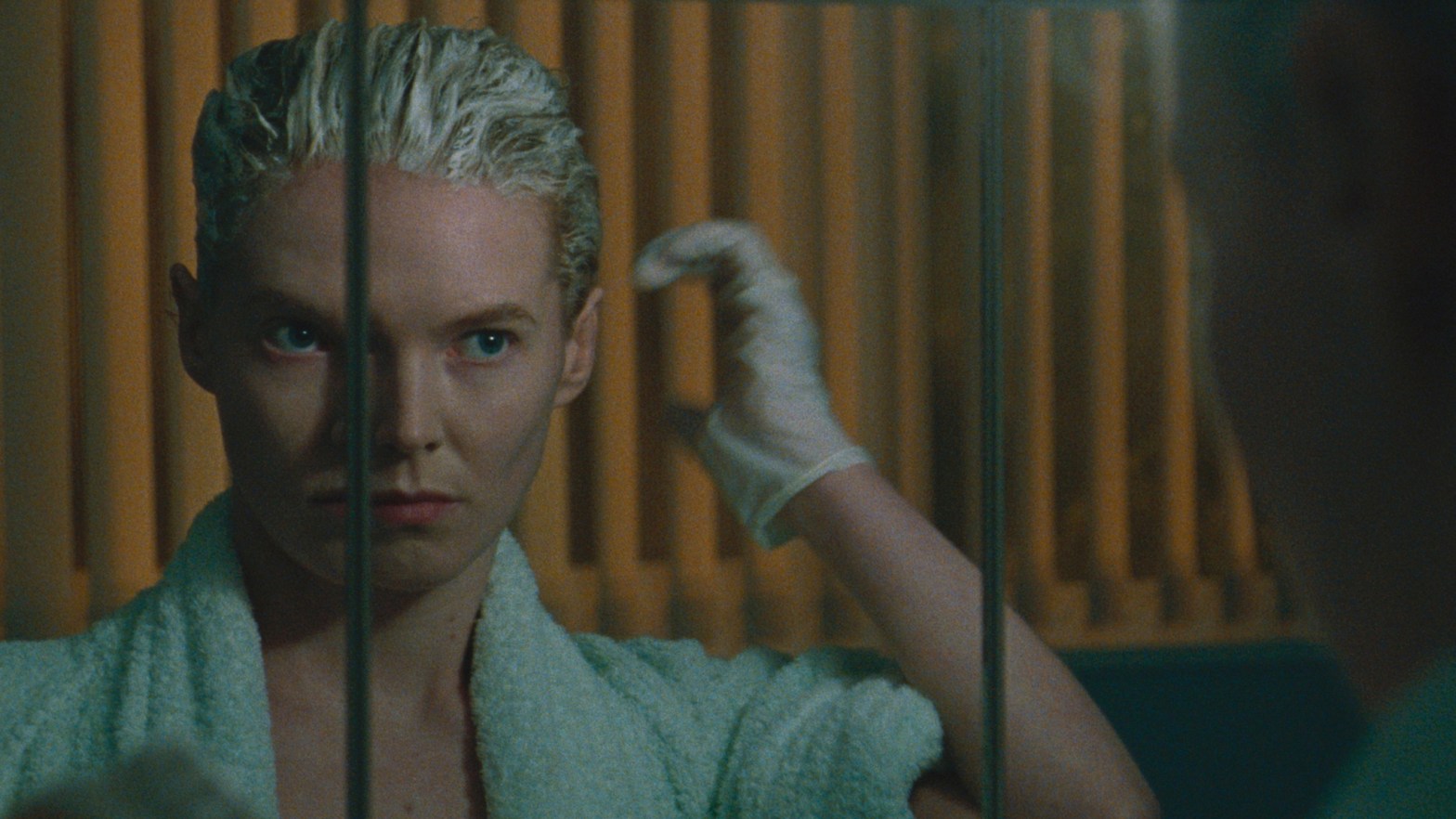
© International Film Festival Rotterdam
With Blue Jean, director Georgia Oakley presents an authentic portrayal of a lesbian community in Thatcher´s Britain.
Directed by: Georgia Oakley
Year: 2022
Country: UK
Length: 97 minutes
Blue Jean presents an authentically lesbian 80´s story about repression during the days of Thatcher in Britain.
´80s Britain – Jean (Rosy McEwen) is a high school PE teacher who lives a discreet life, as she´s not allowed to reveal her true identity publicly. When out of work, she´s regularly accompanied by her lesbian friend group and her girlfriend Viv (a fierce Kerrie Hayes). Together they visit their local lesbian bar at night, in order to be themselves, connect with their community, and express themselves. Though the situation is not optimal, Jean is able to have a safe space in a society that shuts her out for her sexual identity. However, when one of her students, Lois (Lucy Halliday), a girl who is picked on by her classmates, shows up at Jean´s only safe haven, the teacher is faced with a moral dilemma.
Set in Thatcher’s Britain, Jean is constantly reminded of the heteronormative society around her. Whether she’s driving around town or sitting at home watching television, there are always elements surrounding her that signify how she does not fit in, be it a poster on the side of the road or a heterosexual dating show featuring the most shallow stereotypes around gender and sexuality out there. Director Georgia Oakley realistically presents how life was for queer people during a time where practically every element that surrounded them prevented them from embracing their true selves and where even hinting at the possibility of someone deviating from the norms could lead to serious consequences. What separates Blue Jean from the wave of films that center queer trauma is the way it presents community and emphasizes the power of marginalized people coming together in a safe space. Whereas Jean feels the need to conform to the standards under the weight of the society that pressures her to present as heterosexual, her butch girlfriend Viv rebels against all the norms, embracing her non-conforming self wherever she goes. By writing a character like Viv, Oakley shows a necessary element of resistance that is needed to free oneself from repression. Unsurprisingly, Viv pushes Jean to stay true to herself and let go of all the rules that her conservative environment has imposed on her.
While Blue Jean feels like an authentic portrayal of the time period it’s set in, which is visible in every detail crafted by the talented crew consisting of costume designer Kirsty Halliday, cinematographer Victor Seguin and production designer Soraya Gillani, its message also feels relevant and it is important to tell a story like this in today’s world. Not only does Blue Jean remind people of the tragic circumstances that queer people had to go through in the past, but it’s also a work that reminds its audience how necessary it is to prevent situations like this from happening again. With homophobia again being on the rise in the past few years and queer people unrightfully being targeted by propaganda that makes them out to be a negative influence on today’s youth, Oakley´s decision to make a film about a time in which a teacher could be fired for being publicly out as a lesbian or even defending a queer student from bullying feels necessary. Hopefully, a work like Blue Jean will open the eyes of people and contribute to the prevention of queerphobia yet again escalating into a society where people have to pretend to be someone else and hide away from the public to be able to express themselves.
Blue Jean screened at the International Film Festival Rotterdam, where it had its Dutch premiere as part of the Harbour selection.
 obviouslyreviews.com